Long Travel Cable Carrier: The Complete Guide to Long-Stroke Cable Management
What Is a Long Travel Cable Carrier?
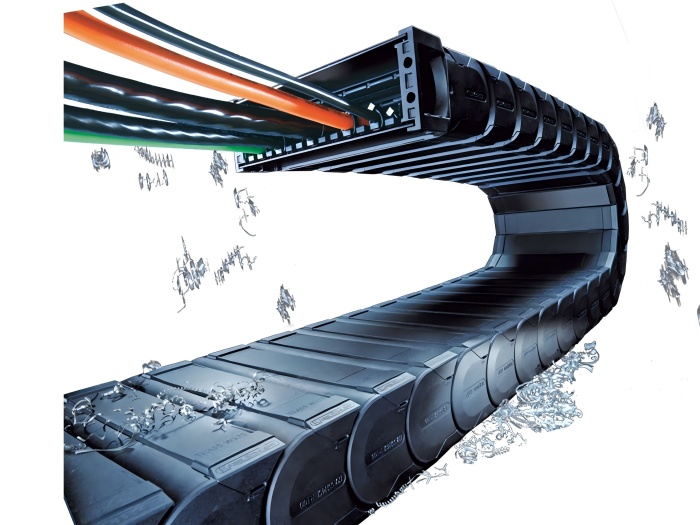
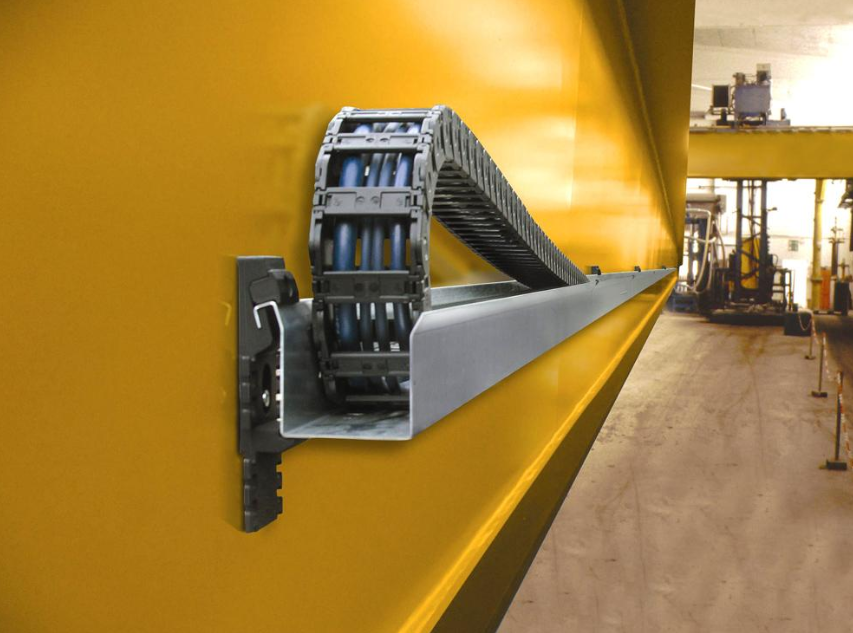
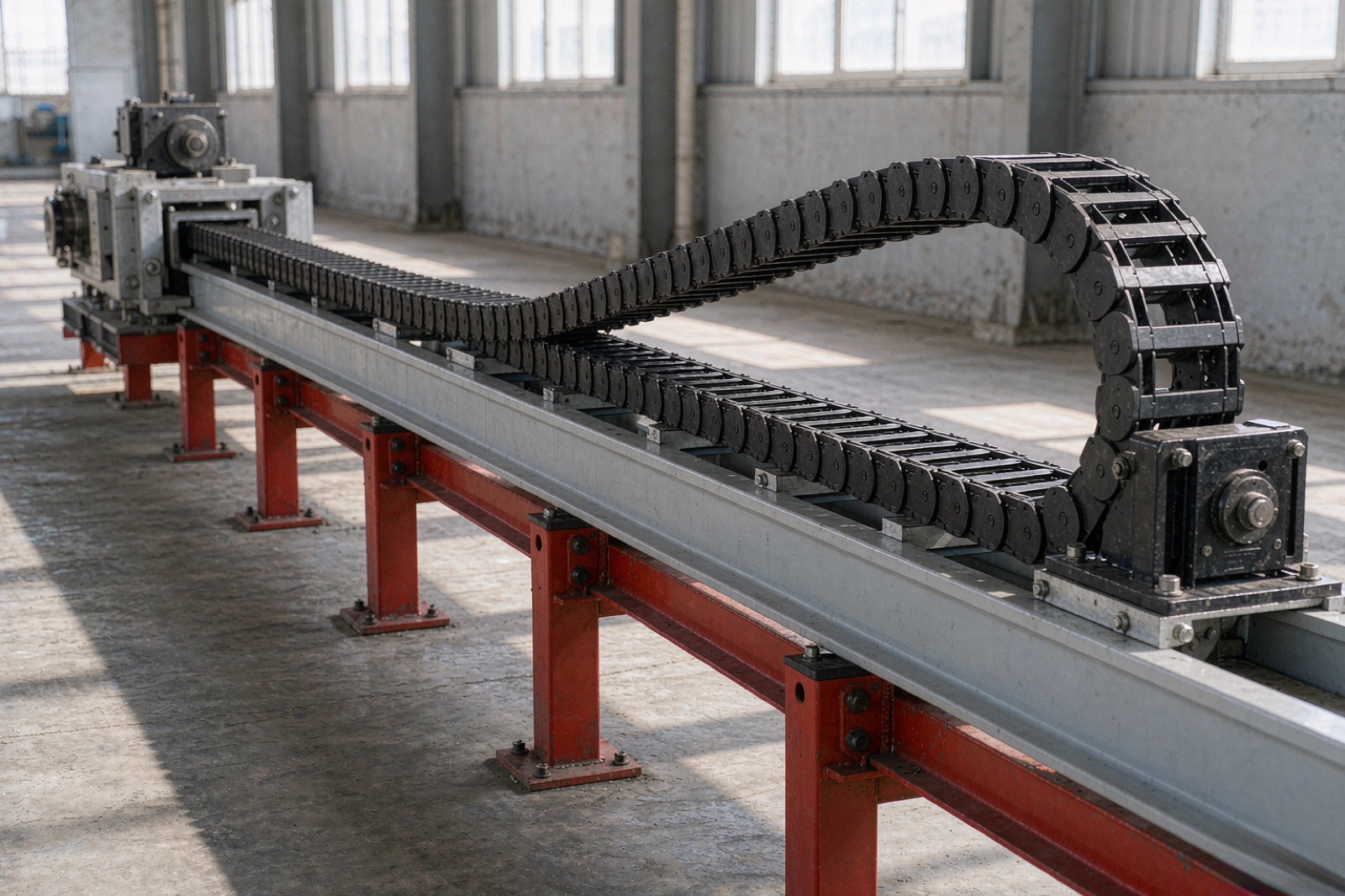
A long travel cable carrier is a cable management system engineered to guide and protect power cables, signal lines, and hydraulic or pneumatic hoses across exceptionally long stroke distances — typically tens to hundreds of meters. Unlike a standard drag chain designed for short machine-tool axes, a long travel carrier must resist sagging, twisting, and excessive friction while a machine moves back and forth at high speed.
These systems are essential wherever automation equipment travels far beyond the reach of a conventional cable track. Common installations include long-bed fiber laser cutting machines, high-bay automated storage and retrieval (AS/RS) stacker cranes, large CNC gantry mills, and port or bulk-material handling cranes.
Why Standard Cable Carriers Fail on Long Strokes
When travel distance grows, two physical problems appear. First, the unsupported upper run of the carrier begins to sag under the weight of the cables it carries. Second, as the chain folds back and glides over its own lower run, the large contact area creates friction, heat, and wear — driving up the push-pull force the motor must overcome.
A conventional short-stroke carrier simply is not designed for these loads. Without special support or friction-reduction features, it wears prematurely, becomes noisy, and can damage the very cables it is meant to protect.
Gliding vs. Roller Systems: Choosing the Right Design
Long travel cable carriers are generally built in two configurations, and the right choice depends on travel length, speed, and load.
| Feature | Gliding System | Roller System |
|---|---|---|
| Best for | Short to medium long strokes | Very long strokes and high speeds |
| Friction | Higher (surface sliding) | Low (rolling point contact) |
| Drive force | Higher push-pull load | Up to 50–75% lower |
| Typical travel | Up to ~10–30 m | 30 m up to several hundred meters |
| Maintenance | Glide shoes wear and need replacement | Rollers/bearings need inspection |
Roller-type carriers use integrated side rollers so the upper run rolls over the lower run instead of sliding. This dramatically cuts friction and motor load, enabling faster speeds and longer service life. Some designs add roller damping to reduce noise and wear by up to 50%.
Key Specifications to Check Before You Buy
- Inner height and width: sized to fit your cable bundle with clearance, plus internal dividers for clean cable separation.
- Bending radius: must be at least 8–10× the diameter of your largest cable to avoid kinking.
- Pitch and link design: shorter pitches run quieter and smoother at high speed.
- Maximum travel length: confirm the carrier is rated for your full stroke, with or without guide troughs.
- Travel speed and acceleration: verify the carrier can keep up with your machine's cycle rate.
- Additional load per meter: ensure it covers the weight of your cables and hoses.
Installation and Maintenance Best Practices
Even the best long travel cable carrier underperforms if it is installed poorly. Anchor both ends rigidly, keep the cable bundle laid flat with no crossing, and leave enough slack (typically 10–20% extra length) so cables are never pulled tight at the end of travel. On gliding systems, inspect and replace glide shoes on schedule; on roller systems, check rollers and bearings regularly and keep running faces clear of debris.
Periodic cleaning of the interior — removing dust, swarf, and chips — prevents small abrasions from growing into cable failures.
Choosing a Long Travel Cable Carrier Manufacturer
Look for a manufacturer that offers reinforced materials (such as glass-fiber reinforced PA66 for plastic carriers, or steel for extreme loads), modular designs with interchangeable links, and the option of custom inner dimensions and bending radii. A supplier with real application engineering experience can help you select the right gliding or roller configuration for your specific stroke, speed, and load — and avoid over- or under-specifying the system.
Drag Chain Installation Tips: 5 Practical Tricks to Reduce Jamming & Breakage