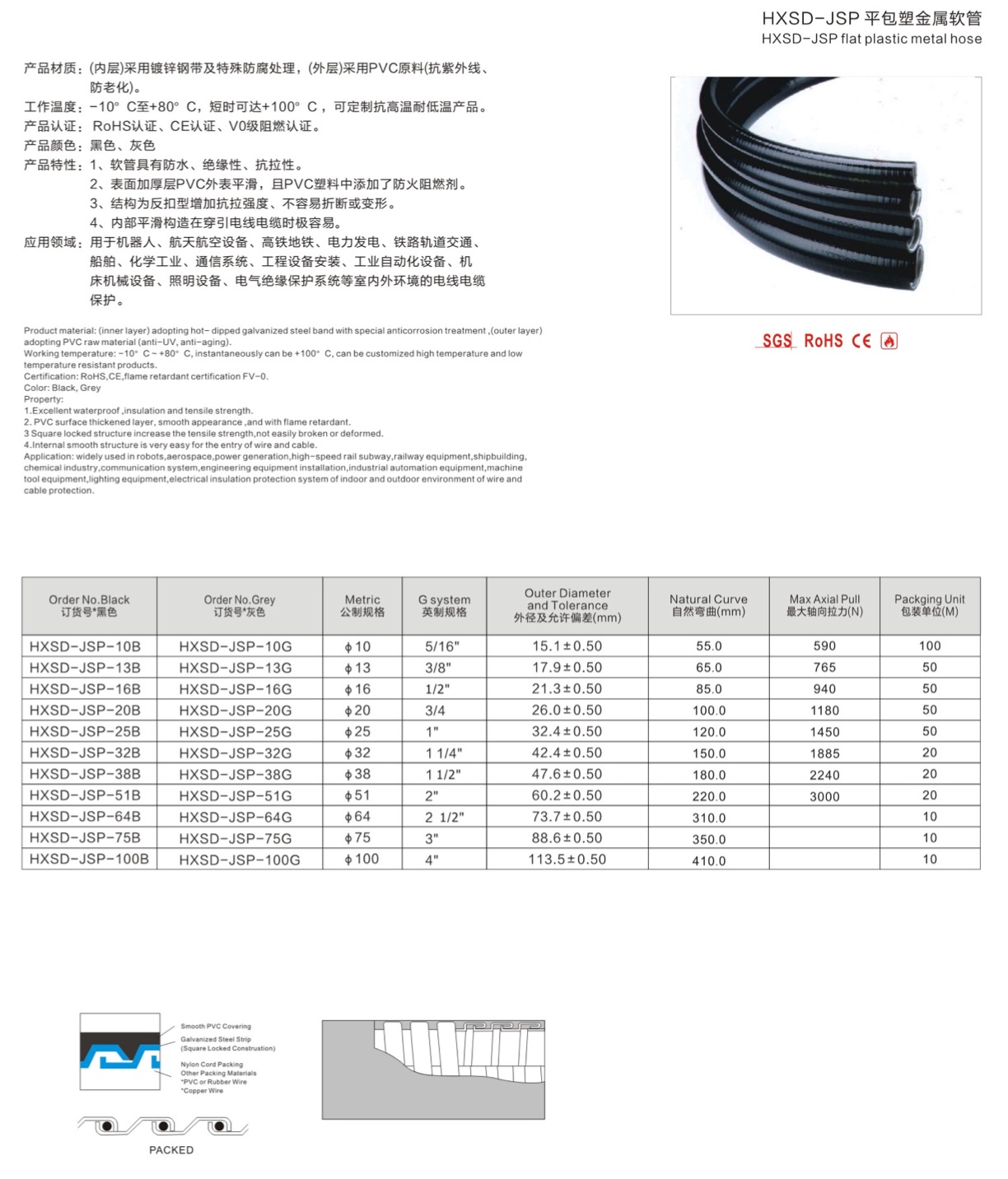


Flat plastic coated Galvanized Steel hose
HXSD-JSP
Quantity
Flat plastic coated Galvanized Steel hose
**Flat Plastic-Coated Galvanized Steel Hose: Durable Flexibility for Demanding Applications**
Flat plastic-coated galvanized steel hoses are hybrid solutions combining the strength of galvanized steel with the corrosion resistance and adaptability of polymer coatings. These hoses feature a flat, spiral-wound steel core coated in PVC, polyethylene, or other thermoplastics, offering exceptional durability, flexibility, and environmental protection. Ideal for applications requiring both mechanical resilience and resistance to moisture, chemicals, or abrasion, they are widely used in automotive, agricultural, industrial, and construction settings.
With a density exceeding 5% in systems like hydraulic machinery, dust collection units, and material handling equipment, these hoses excel in environments where traditional rubber or plastic hoses fail. The galvanized steel core provides structural integrity, preventing collapse under vacuum or pressure, while the plastic coating shields against rust, UV radiation, and extreme temperatures (-10°C to 80°C). Their flat profile ensures space efficiency, making them suitable for tight installations in engines, conveyor systems, or HVAC ducts.
Key advantages include flame retardancy, static dissipation, and noise reduction—critical in mining, chemical processing, or food production. Customizable lengths, diameters, and coating thicknesses cater to specific operational needs, such as heavy-duty grain transfer in agriculture or coolant line management in automotive assembly.
Compliance with ISO, SAE, and RoHS standards guarantees safety and compatibility. Innovations like anti-microbial coatings or recyclable materials align with sustainability trends. By balancing rigidity and pliability, flat plastic-coated galvanized steel hoses minimize maintenance, reduce downtime, and enhance system longevity. Their growing prevalence in automation and renewable energy infrastructure underscores their role as indispensable components in modern engineering, where reliability and adaptability are paramount.
Flat plastic-coated galvanized steel hoses are hybrid solutions combining the strength of galvanized steel with the corrosion resistance and adaptability of polymer coatings. These hoses feature a flat, spiral-wound steel core coated in PVC, polyethylene, or other thermoplastics, offering exceptional durability, flexibility, and environmental protection. Ideal for applications requiring both mechanical resilience and resistance to moisture, chemicals, or abrasion, they are widely used in automotive, agricultural, industrial, and construction settings.
With a density exceeding 5% in systems like hydraulic machinery, dust collection units, and material handling equipment, these hoses excel in environments where traditional rubber or plastic hoses fail. The galvanized steel core provides structural integrity, preventing collapse under vacuum or pressure, while the plastic coating shields against rust, UV radiation, and extreme temperatures (-10°C to 80°C). Their flat profile ensures space efficiency, making them suitable for tight installations in engines, conveyor systems, or HVAC ducts.
Key advantages include flame retardancy, static dissipation, and noise reduction—critical in mining, chemical processing, or food production. Customizable lengths, diameters, and coating thicknesses cater to specific operational needs, such as heavy-duty grain transfer in agriculture or coolant line management in automotive assembly.
Compliance with ISO, SAE, and RoHS standards guarantees safety and compatibility. Innovations like anti-microbial coatings or recyclable materials align with sustainability trends. By balancing rigidity and pliability, flat plastic-coated galvanized steel hoses minimize maintenance, reduce downtime, and enhance system longevity. Their growing prevalence in automation and renewable energy infrastructure underscores their role as indispensable components in modern engineering, where reliability and adaptability are paramount.