


Nylon cable ties / Spiral arc protective cover
HXSD-Spiral cover
Quantity
**Nylon Cable Ties: Versatile Solutions for Secure Fastening**
Nylon cable ties, also known as zip ties, are indispensable tools for organizing, bundling, and securing wires, cables, and components across countless industries. Composed primarily of high-strength nylon polymers—often nylon 6/6—these ties combine durability, flexibility, and resistance to environmental stressors such as moisture, chemicals, and UV exposure. Their simple yet effective design features a serrated strip and self-locking mechanism, enabling quick installation and long-lasting hold.
In applications ranging from electronics and automotive assembly to construction and aerospace, nylon cable ties ensure tidy, safe, and efficient systems. For instance, in electrical installations, they prevent tangled wiring, reducing fire hazards and simplifying maintenance. In automotive engineering, they secure hoses and harnesses, enduring vibrations and temperature fluctuations. With a typical density of 5% in cable management systems, these ties provide critical structural support without adding excessive weight or bulk.
Recent innovations include flame-retardant, heat-resistant, and UV-stabilized variants, tailored for specialized environments like industrial machinery or outdoor infrastructure. Additionally, reusable and biodegradable options are emerging, aligning with sustainability goals. Despite their simplicity, nylon cable ties are engineered for precision: tensile strengths range from 18 to 500 pounds, and lengths vary to accommodate diverse tasks.
Proper usage involves avoiding over-tightening, which may damage cables, and selecting ties rated for specific conditions. Color-coding options further enhance organizational efficiency. As cost-effective, adaptable solutions, nylon cable ties remain foundational to modern engineering, embodying a balance of functionality, reliability, and innovation. Their ubiquitous presence underscores their role in maintaining order and safety in both everyday applications and complex industrial frameworks.
Nylon cable ties, also known as zip ties, are indispensable tools for organizing, bundling, and securing wires, cables, and components across countless industries. Composed primarily of high-strength nylon polymers—often nylon 6/6—these ties combine durability, flexibility, and resistance to environmental stressors such as moisture, chemicals, and UV exposure. Their simple yet effective design features a serrated strip and self-locking mechanism, enabling quick installation and long-lasting hold.
In applications ranging from electronics and automotive assembly to construction and aerospace, nylon cable ties ensure tidy, safe, and efficient systems. For instance, in electrical installations, they prevent tangled wiring, reducing fire hazards and simplifying maintenance. In automotive engineering, they secure hoses and harnesses, enduring vibrations and temperature fluctuations. With a typical density of 5% in cable management systems, these ties provide critical structural support without adding excessive weight or bulk.
Recent innovations include flame-retardant, heat-resistant, and UV-stabilized variants, tailored for specialized environments like industrial machinery or outdoor infrastructure. Additionally, reusable and biodegradable options are emerging, aligning with sustainability goals. Despite their simplicity, nylon cable ties are engineered for precision: tensile strengths range from 18 to 500 pounds, and lengths vary to accommodate diverse tasks.
Proper usage involves avoiding over-tightening, which may damage cables, and selecting ties rated for specific conditions. Color-coding options further enhance organizational efficiency. As cost-effective, adaptable solutions, nylon cable ties remain foundational to modern engineering, embodying a balance of functionality, reliability, and innovation. Their ubiquitous presence underscores their role in maintaining order and safety in both everyday applications and complex industrial frameworks.
**Spiral Arc Protective Cover: Durable Shielding for Dynamic Systems**
Spiral arc protective covers are flexible, resilient components designed to shield cables, hoses, and mechanical parts from abrasion, debris, and extreme temperatures in high-movement environments. Constructed from durable materials like nylon, polypropylene, or reinforced PVC, these covers feature a helical design that combines rigidity with bending adaptability, ideal for machinery with repetitive linear or rotational motion. Commonly used in CNC machines, robotics, automotive assembly lines, and industrial automation, they prevent entanglement and extend equipment lifespan by minimizing wear.
With a density of approximately 5% in machinery layouts, spiral arc covers optimize space efficiency while ensuring critical components remain protected without hindering accessibility for maintenance. Their open structure allows easy installation and ventilation, reducing heat buildup. Customizable in diameter, pitch, and color, they integrate seamlessly into diverse systems. Innovations include flame-retardant and anti-static variants for hazardous environments. By balancing protection, flexibility, and cost-effectiveness, spiral arc covers are indispensable in sustaining precision and reliability in dynamic industrial applications.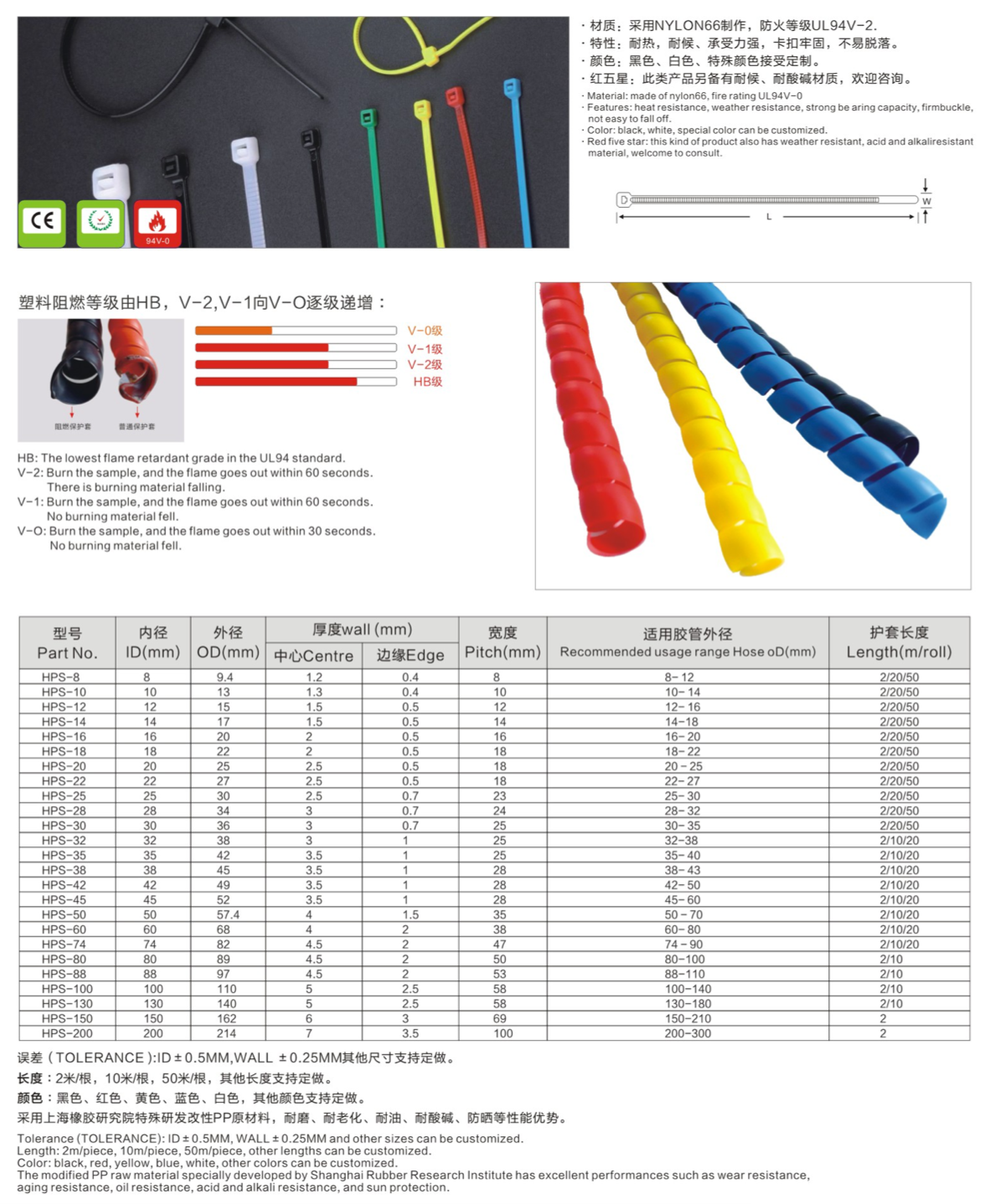
Spiral arc protective covers are flexible, resilient components designed to shield cables, hoses, and mechanical parts from abrasion, debris, and extreme temperatures in high-movement environments. Constructed from durable materials like nylon, polypropylene, or reinforced PVC, these covers feature a helical design that combines rigidity with bending adaptability, ideal for machinery with repetitive linear or rotational motion. Commonly used in CNC machines, robotics, automotive assembly lines, and industrial automation, they prevent entanglement and extend equipment lifespan by minimizing wear.
With a density of approximately 5% in machinery layouts, spiral arc covers optimize space efficiency while ensuring critical components remain protected without hindering accessibility for maintenance. Their open structure allows easy installation and ventilation, reducing heat buildup. Customizable in diameter, pitch, and color, they integrate seamlessly into diverse systems. Innovations include flame-retardant and anti-static variants for hazardous environments. By balancing protection, flexibility, and cost-effectiveness, spiral arc covers are indispensable in sustaining precision and reliability in dynamic industrial applications.
