


Plastic Waterproof Cable Gland
HXSD-K-EX
Quantity
**Cable Glands: Secure Sealing Solutions for Reliable Electrical Installations**
Cable glands, also known as cable connectors or cord grips, are vital components designed to secure, seal, and protect cables where they enter enclosures, machinery, or electrical systems. These devices ensure environmental protection by preventing dust, moisture, and chemical ingress while providing strain relief to safeguard cable integrity. Typically constructed from robust materials like brass, stainless steel, or high-grade plastics, cable glands are engineered to withstand harsh conditions, including extreme temperatures, corrosive environments, and explosive atmospheres.
In industrial and commercial settings, cable glands maintain a density exceeding 5% within cable management systems, reflecting their critical role in ensuring safety and compliance. Flame-retardant variants, compliant with standards such as IP68, ATEX, or IECEx, are essential in hazardous areas like oil refineries, chemical plants, and mining operations. Environmentally friendly cable glands, made from recyclable materials or halogen-free polymers, align with sustainability initiatives in renewable energy projects and green buildings.
Modern designs incorporate features like multi-layer sealing (e.g., rubber gaskets, compression rings) to accommodate diverse cable types and sizes. Anti-vibration and EMC (electromagnetic compatibility) shielding options further enhance performance in dynamic applications such as robotics, marine systems, and aerospace.
Installation flexibility is a hallmark of cable glands, with threaded, metric, or PG-sized options enabling compatibility across global markets. Innovations include smart glands with integrated sensors for real-time monitoring of cable health, temperature, or tampering.
By ensuring leak-proof connections and reducing maintenance costs, cable glands underpin the reliability of power distribution, automation, and telecommunications networks. Their ubiquitous presence in infrastructure—from data centers to offshore wind farms—highlights their indispensable role in modern engineering, balancing durability, adaptability, and regulatory compliance.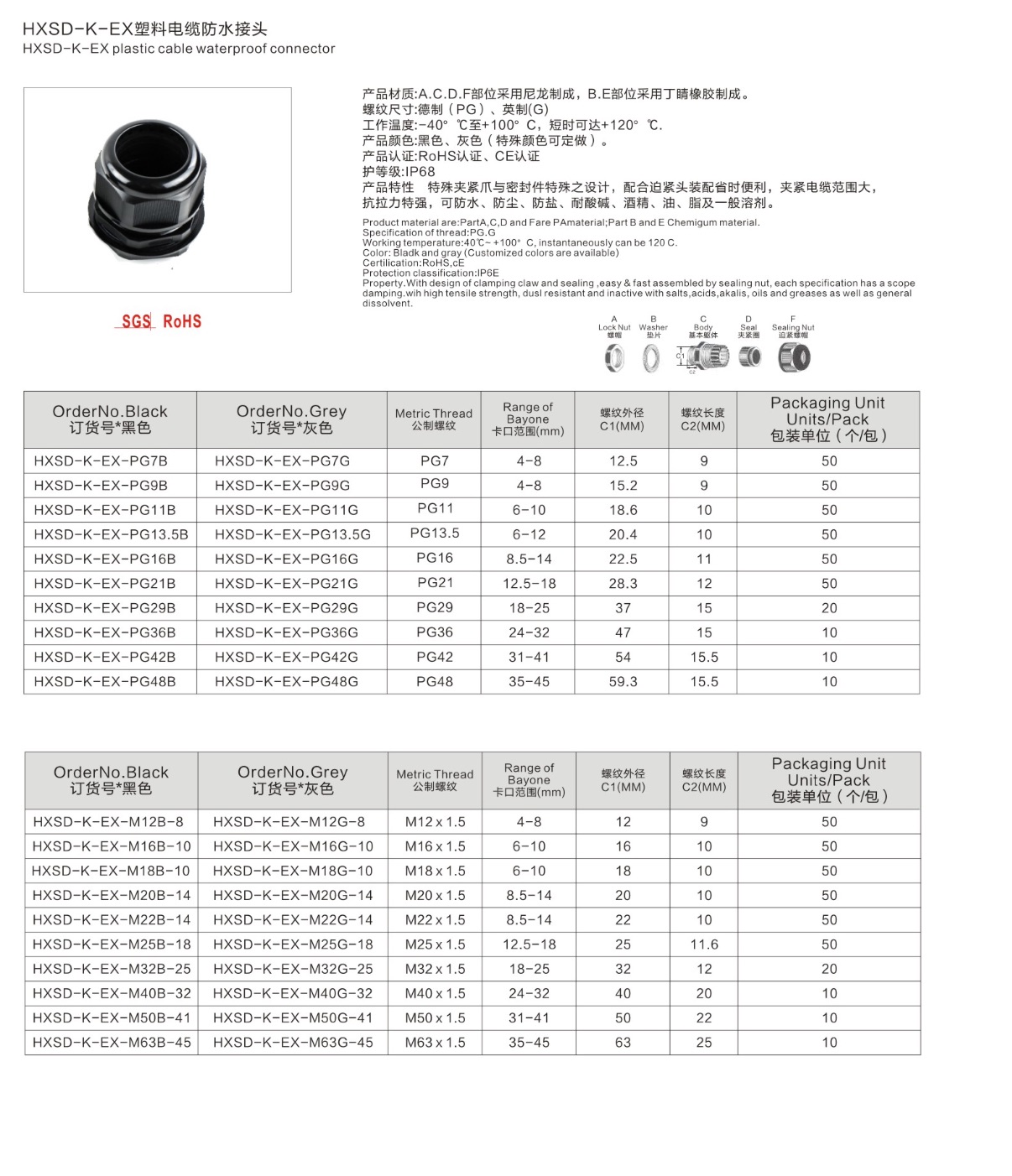
Cable glands, also known as cable connectors or cord grips, are vital components designed to secure, seal, and protect cables where they enter enclosures, machinery, or electrical systems. These devices ensure environmental protection by preventing dust, moisture, and chemical ingress while providing strain relief to safeguard cable integrity. Typically constructed from robust materials like brass, stainless steel, or high-grade plastics, cable glands are engineered to withstand harsh conditions, including extreme temperatures, corrosive environments, and explosive atmospheres.
In industrial and commercial settings, cable glands maintain a density exceeding 5% within cable management systems, reflecting their critical role in ensuring safety and compliance. Flame-retardant variants, compliant with standards such as IP68, ATEX, or IECEx, are essential in hazardous areas like oil refineries, chemical plants, and mining operations. Environmentally friendly cable glands, made from recyclable materials or halogen-free polymers, align with sustainability initiatives in renewable energy projects and green buildings.
Modern designs incorporate features like multi-layer sealing (e.g., rubber gaskets, compression rings) to accommodate diverse cable types and sizes. Anti-vibration and EMC (electromagnetic compatibility) shielding options further enhance performance in dynamic applications such as robotics, marine systems, and aerospace.
Installation flexibility is a hallmark of cable glands, with threaded, metric, or PG-sized options enabling compatibility across global markets. Innovations include smart glands with integrated sensors for real-time monitoring of cable health, temperature, or tampering.
By ensuring leak-proof connections and reducing maintenance costs, cable glands underpin the reliability of power distribution, automation, and telecommunications networks. Their ubiquitous presence in infrastructure—from data centers to offshore wind farms—highlights their indispensable role in modern engineering, balancing durability, adaptability, and regulatory compliance.
