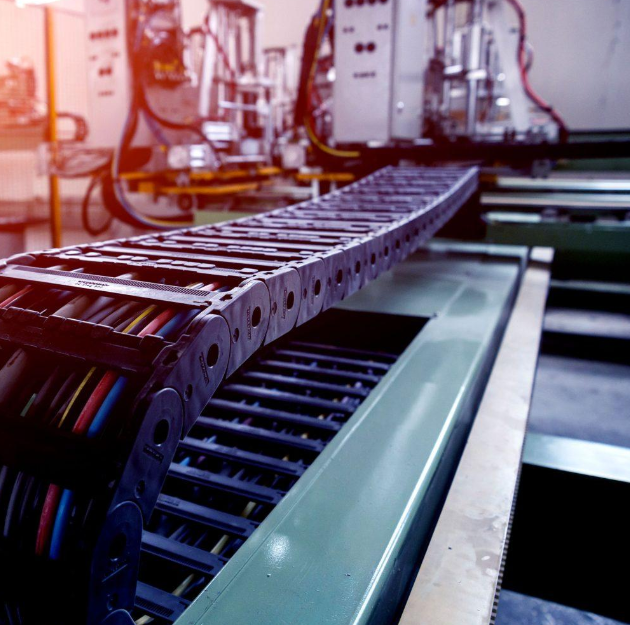
Drag Chains in Automated Warehouse Systems: The Unsolved Challenge of Modern Logistics
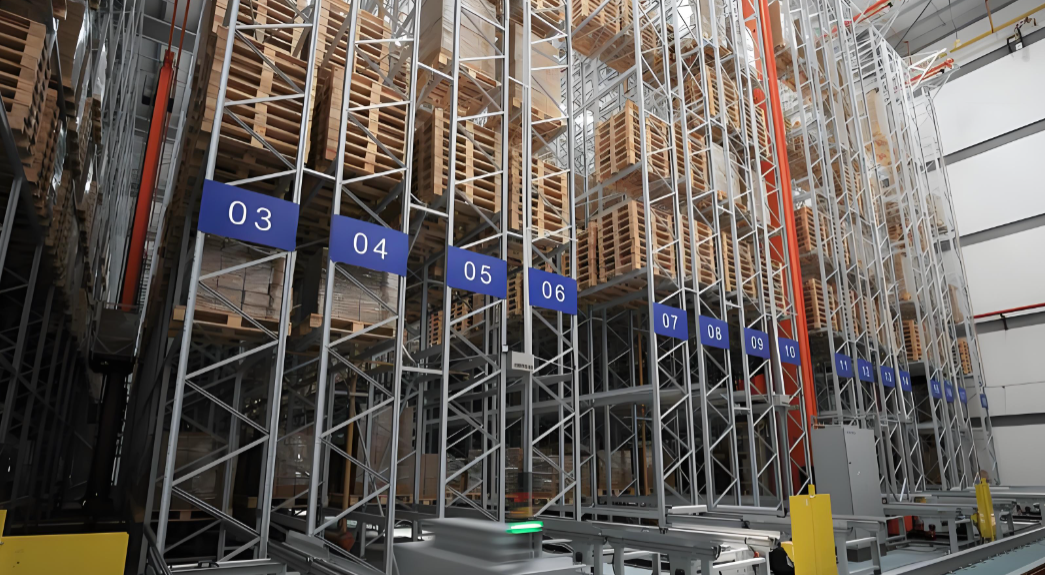
The global automated storage and retrieval system (AS/RS) market is booming, projected to reach $16.5 billion by 2030. Yet beneath the headlines about robotic shuttles and AI-powered inventory management lies a persistent engineering headache: how to reliably deliver power and data to equipment that moves continuously, at high speeds, for years without stopping.
This is where drag chains (also known as energy chains or cable carriers) earn their keep. While AS/RS has been a drag chain application for years, several unsolved challenges continue to frustrate warehouse operators and system integrators. This article examines three of the most persistent problems and explores emerging solutions.
The Three Unsolved Challenges of Drag Chains in Warehousing
1. Buckling at High Speeds
Modern storage and retrieval units (SRUs) routinely operate at speeds of 4-6 m/s with rapid acceleration. At these velocities, the drag chain's upper run can buckle—a phenomenon where the chain loses compressive stability and collapses.
Why it matters: Buckling causes the chain to jam against racking or other components. When a SRU jams mid-aisle, recovery often requires manual intervention, shutting down the entire aisle for hours.
The physics problem: When a drag chain is pushed from the fixed end during deceleration, it behaves like a long column under compressive load. Without adequate lateral support, Euler buckling occurs. Standard unsupported chains simply cannot maintain stability at modern warehouse speeds beyond about 3 m/s.
Conventional solution: Install a full-length guide trough. The chain runs inside a channel, with the upper run held in a separate slot. This prevents buckling but introduces new problems: the trough occupies valuable space, collects dust, and increases installation cost.
Emerging solution: Guide-trough designs with side-wing mechanisms. Each chain link features small plastic tabs that fold out when the chain is extended, holding the upper run securely in its track while allowing the lower run to return freely. Test data shows wear-free operation at 4 m/s beyond one million cycles—approximately 12,000 km of travel.
2. Chain-on-Chain Wear
In long-travel applications without guide troughs, the returning upper run simply rests on the lower run. This creates friction, generates dust, and wears both chain and cables.
Why it matters: Sliding chains might only survive 5,000-10,000 km before replacement. For a busy warehouse aisle completing 1,000 cycles per day, that's just 2-4 years of operation. Worse, the debris from wear can contaminate sensitive warehouse electronics and products.
The design flaw: Most plastic drag chains use identical materials for both the chain body and the sliding surfaces. When two identical materials slide against each other, the coefficient of friction is relatively high, and wear debris accumulates rapidly.
Conventional solution: Replace the entire chain on a fixed schedule. This is expensive (both in parts and labor) and requires scheduled downtime that disrupts warehouse operations.
Emerging solution 1 - Material separation: Chains designed with specialized sliding strips made from a different, lower-friction polymer than the chain body. When the upper run contacts the lower run, they slide against dissimilar materials with significantly reduced friction and wear.
Emerging solution 2 - Rolling instead of sliding: True rolling designs where the chain incorporates small rollers or wheels. When the upper run is pushed forward, the rollers carry the load rather than sliding surfaces. This reduces friction by an order of magnitude and eliminates most wear debris.
3. Dust Generation
This is the hidden killer of warehouse automation. Every sliding component generates microscopic particles. Over months and years, this dust:
- Accumulates on optical sensors used for position feedback
- Contaminates product packaging (unacceptable in food/pharma warehouses)
- Is drawn into cooling fans of onboard electronics
- Creates a slippery residue on walkways
Why it matters: Warehouse operators report cleaning sensor arrays monthly or even weekly. Some pharmaceutical distributors have rejected drag chain systems entirely for sensitive product zones due to contamination concerns.
The root cause: Traditional cable management systems (busbars, festoon systems, and standard drag chains) all involve sliding electrical contacts or sliding chain links—both generate debris.
Emerging solution - Enclosed rolling chains: Rolling chain designs generate negligible dust because there is no sliding friction. Complete enclosure prevents any generated particles from escaping into the environment. Early adopters in cleanroom applications report operating for 5+ years without dust-related maintenance.
The trade-off: Enclosed rolling chains cost approximately 30-40% more than standard sliding chains. However, when factoring in reduced maintenance labor, eliminated downtime, and avoided contamination risks, payback periods of 12-18 months are typical for high-throughput facilities.
The Busbar Comparison
Many warehouse operators currently use busbar systems for power transmission. How do drag chains compare on these three challenges?
|
Challenge |
Busbar System |
Standard Drag Chain |
Enclosed Rolling Chain |
|
Buckling at speed |
Not applicable (no chain) |
Problematic above 3 m/s |
Stable to 6+ m/s |
|
Wear debris |
Pantograph contacts wear |
Chain-on-chain friction |
Minimal (rolling) |
|
Dust generation |
Moderate (contact wear) |
High |
Very low |
|
Installation time |
1.5+ days per aisle |
Hours |
Hours |
The key insight: standard drag chains solve the installation and maintenance problems of busbars but introduce dust and buckling issues at high speeds. Enclosed rolling chains solve all three simultaneously—at a premium price.
Practical Recommendations for Warehouse Operators
For New Installations (Travel < 30m)
Specify a trough-less rolling chain. The elimination of guide trough reduces both material cost and installation time. Rolling design eliminates dust and wear concerns. Payback versus standard chain is typically less than 18 months.
For New Installations (Travel > 30m)
Specify a guided chain with side-wing guidance. The guide trough prevents buckling at high speeds. For dust-sensitive environments, add enclosures. For standard environments, sliding chains with dissimilar-material wear strips offer acceptable performance with lower upfront cost.
For Retrofitting Existing Busbar Systems
Replace the entire energy supply with an enclosed rolling chain system. The installation can be completed over a single weekend. Warehouse operators report 50-70% reduction in maintenance hours and elimination of unplanned downtime from contact failures.
For Extreme Dust-Sensitive Applications (Food/Pharma)
Accept no compromise: specify fully enclosed rolling chains with secondary seals. While upfront cost is high (2x standard sliding chains), the cost of even a single product contamination event far exceeds this premium.
Conclusion
Drag chains for AS/RS have evolved dramatically. The old trade-offs—buckling or troughs, dust or maintenance—are being eliminated by rolling designs and advanced guidance systems. For warehouse operators, the decision is no longer whether to use drag chains, but which generation of technology to deploy. Those who continue specifying standard sliding chains are accepting performance limitations that modern solutions have already solved.


Flexible Cable Management for Packaging Automation: Improving Reliability and Efficiency