Reliable Rotary Cable Carrier Solutions
Precision Rotary Cable Carriers for CNC Applications
In the world of automated manufacturing, especially in CNC rotary axis setups, the right rotary cable carrier plays a crucial role. Without reliable motion cable management, the risk of cable twisting, wear, and system failure increases dramatically. That’s where SONDA comes in — offering durable, flexible, and affordable cable carriers for rotary motion built for performance and longevity.
What Makes a Good Cable Carrier for Rotary Motion?
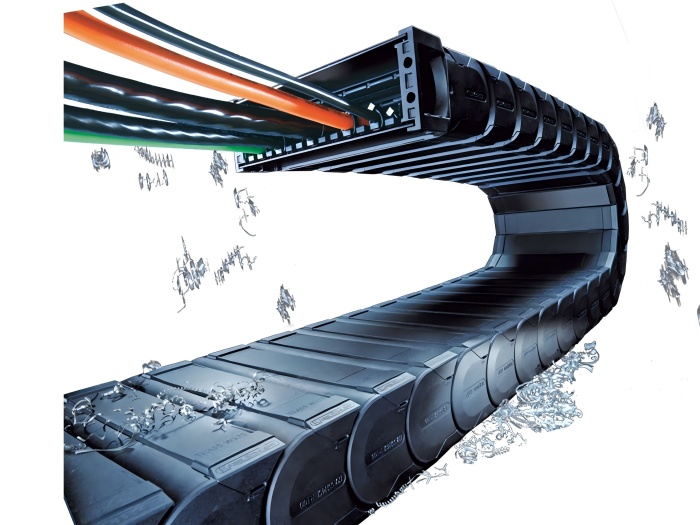
Unlike linear systems, rotary motion requires a carrier that can maintain cable alignment while rotating in a confined space. Our CNC rotary axis cable carrier is designed specifically for such demands. With a segmented design and precise torsion tolerance, it minimizes cable stress, ensuring smooth operation over thousands of rotation cycles.
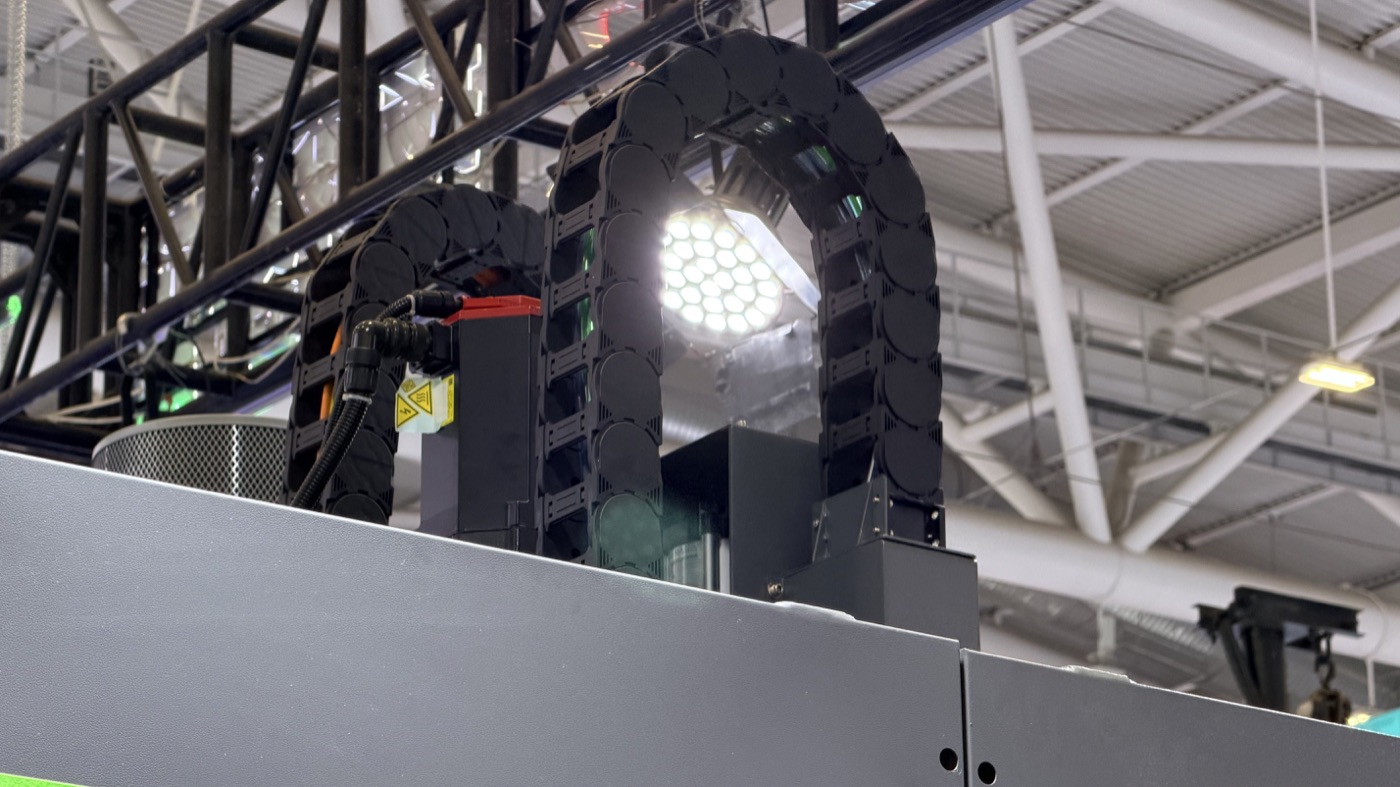
Our rotary cable chains are used in rotary tables, automated welding systems, robotic arms, and 4th-axis CNC setups — offering quiet operation, minimal vibration, and exceptional cable protection.


Rotary Motion Needs a Chain That Twists, Not Just Bends
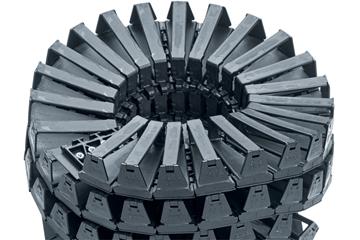
A rotary axis does two things to a cable at once: it bends the cable round a radius and it twists the chain itself. A standard linear carrier handles the first and fails on the second. The dedicated answer is the SRLF three-dimensional chain, which is built link by link to rotate.
| Model | Bend radius | Outer diameter | Max cable | Links per metre | Bracket |
|---|---|---|---|---|---|
| SRLF-65 | R100 | 70.2 mm | Ø22 | 23.1 | SRLF-65-100C |
| SRLF-85 | R135 | 94.5 mm | Ø30 | 30.6 | SRLF-85-135C |
| SRLF-100 | R145 | 108 mm | Ø35 | 34.5 | SRLF-100-145C |
Three limits govern the selection, and they are absolute rather than advisory. Each link turns plus or minus 10 degrees, so a metre of chain accumulates about 380 degrees. The average tensile capacity is 1,000 N. And the cable itself has to be rated for torsion at a radius of 10 times its diameter — a standard drag chain cable taken through four to six axes will open up like a corkscrew, whatever the chain does.
Linear or Rotary: The Five Questions That Separate Them
Buyers often ask for a rotary carrier when the axis only bends. The distinction is mechanical, and it is settled by five questions rather than by product naming.
| Question | Linear carrier | Rotary or 3D chain |
|---|---|---|
| Does the chain axis itself rotate? | No, it travels in one plane | Yes, up to 10 degrees per link |
| Is the bend radius fixed? | Fixed by the chain, R40 to R600 | Fixed, but the chain also turns |
| Cable type | Drag chain cable, 7.5 to 12.5 times diameter | Torsion-rated cable, 10 times diameter |
| Typical failure if mismatched | Side plate wear, pin elongation | Cable corkscrewed, conductor break inside the jacket |
| Typical application | Gantry, CNC table, robot seventh axis | Rotary table, index head, multi-axis robot wrist |
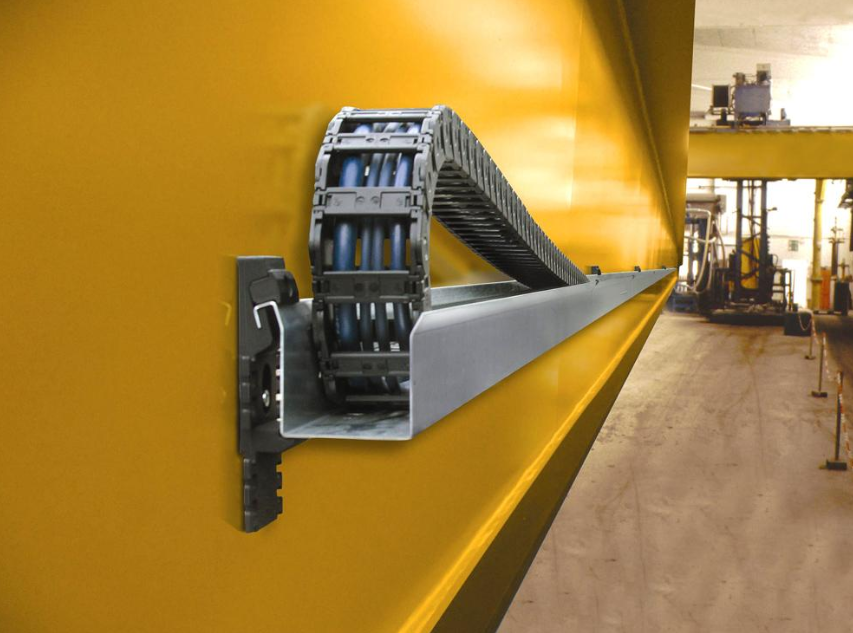
If the axis only swings through a small angle and the chain stays in one plane, a standard carrier with a generous radius is the cheaper and more durable answer. The 3D chain earns its cost only when the chain body genuinely has to rotate around the machine axis.
The Smart Alternative to Igus Rotary Cable Chains
Looking for a cost-effective igus rotary cable chain alternative? SONDA offers comparable performance with better pricing, faster lead times, and more flexible customization. Whether you're replacing a legacy igus chain or sourcing components for a new build, SONDA rotary carriers deliver:
-
High-strength polymer construction
-
Optional inner divider systems
-
Custom mounting options and lengths
-
Competitive pricing, especially for OEMs and resellers
Replacing a Rotary Chain That Has Already Failed
Rotary chains rarely fail from load. They fail because the cable inside was never torsion-rated, or because the replacement was ordered by link count from the old chain rather than by length.
Three measurements settle it: the length of the old chain laid flat, the bend radius stamped on the side plate, and the cable type. A standard drag chain cable taken through a rotating axis will corkscrew regardless of what the chain around it does.
Then order by length, not by links. Divide the required length by the new pitch and round up — a rotary chain one link short will not reach the bracket, and on a rotating axis that shows up as a cable pulled out of its gland rather than as an obvious mechanical fault.
Two things are worth checking on the machine before the order goes out: the bracket bolt pattern, which is specific to the SRLF model, and whether the rotation is continuous in one direction or oscillating. Continuous rotation needs the torsion-rated cable even at a small angle, because the twist accumulates over every revolution.
Why Distributors and Engineers Choose SONDA
Our strength lies in our ability to adapt. Whether you need a single rotary cable carrier for testing or a bulk supply for mass production, SONDA has you covered with:
-
Direct factory pricing
-
Custom solutions for rotary motion
-
Responsive overseas support
-
Small batch flexibility with fast delivery
We’ve recently set up our own global sales department, meaning no more waiting on third-party traders — you get expert help, faster quotes, and direct access to technical support.
Let’s Work Together
SONDA is actively looking for global agents, system integrators, and distributors. If you're sourcing high-quality rotary cable carrier solutions or seeking a better igus alternative, get in touch today. Let’s build something better — together.

Routing cables through a rotating axis?
Send us the rotation angle, the axis diameter, the cable diameters and whether the cable is torsion-rated. Our engineers reply with the SRLF model and the bracket, usually within one working day.
Flexible Cable Chains for Smart Robotics
Ultimate Guide: Maximum CNC Drag Chain Lengths & Customization Options