Cable Carrier for Machine Tool: The Complete Selection Guide
What a Cable Carrier Really Does on a Machine Tool
A cable carrier for machine tool duty is not simply a plastic loop that keeps wires tidy. It is a motion component: it defines the bend radius your cables are allowed to reach, controls how they are supported while the axis accelerates, and separates power conductors from encoder and signal lines so that electrical noise never reaches the control loop. When a carrier is chosen badly, the symptom rarely appears in the carrier itself. It appears as a broken encoder cable, a false alarm on a drive, or a coolant hose that splits after eight months.
That is why machine tool builders treat the carrier as part of the axis design, not as an accessory bought at the end of the project. The carrier has to survive the same duty cycle as the linear guide and the ball screw, usually several million strokes over the life of the machine.
The Three Carrier Types You Will See on Machine Tools
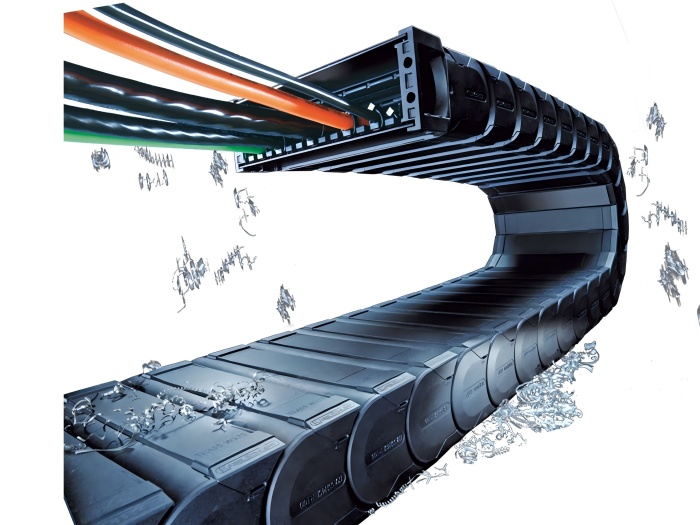
Almost every carrier installed on a machine tool falls into one of three constructions. The choice is driven by stroke length, speed, chip and coolant exposure, and the mass of the cable package.
| Type | Typical use on a machine tool | Strengths | Limits |
|---|---|---|---|
| Plastic (PA66) carrier | Vertical and short horizontal axes, tool changers, X/Y/Z on vertical machining centres | Light, quiet, no lubrication, resistant to coolant | Lower load capacity, weaker in hot chip environments |
| Steel carrier | Heavy gantry axes, long travels, high chip load | High strength and heat resistance | Heavier moving mass, noisier, needs lubrication |
| Hybrid / steel-pin plastic | Long horizontal strokes at high speed | Plastic body with reinforced pins and joints | Higher cost, needs correct pin grade |
For most vertical machining centres and engraving machines, glass-fibre reinforced PA66 is the correct answer. For a five-metre gantry with a heavy spindle head, steel or a hybrid design is usually more economical over the life of the machine.
Five Parameters That Decide Whether the Carrier Survives
These five numbers decide almost everything. Get them wrong and no amount of careful installation will save the carrier.
- Inner height and width. Size the cavity for the actual cable bundle plus 10 to 20 percent free space. Cables stacked on top of each other rub against one another; internal separators and shelves keep each line in its own lane.
- Bend radius. The minimum bending radius of the stiffest cable in the bundle, multiplied by a safety factor, sets the carrier radius. Never allow the radius to drop below the cable manufacturer's figure, and remember that the carrier radius and the cable bend radius are measured from different reference points.
- Stroke length. The chain length needed is roughly half the stroke plus the bend arc, plus a margin at each end for the fixed and moving connections.
- Speed and acceleration. Above roughly 2 m/s on a horizontal run, a gliding chain starts to lift and slap. Rollers or a guide trough become necessary, not optional.
- Additional load. Sum the weight per metre of every cable and hose, then add the weight of any brackets or connectors riding in the chain. Most premature failures on machine tools come from underestimating this number.
Matching the Carrier to the Machine Type
Different machine tools load their carriers in very different ways, and a design that works on one will fail on another.
Vertical machining centres
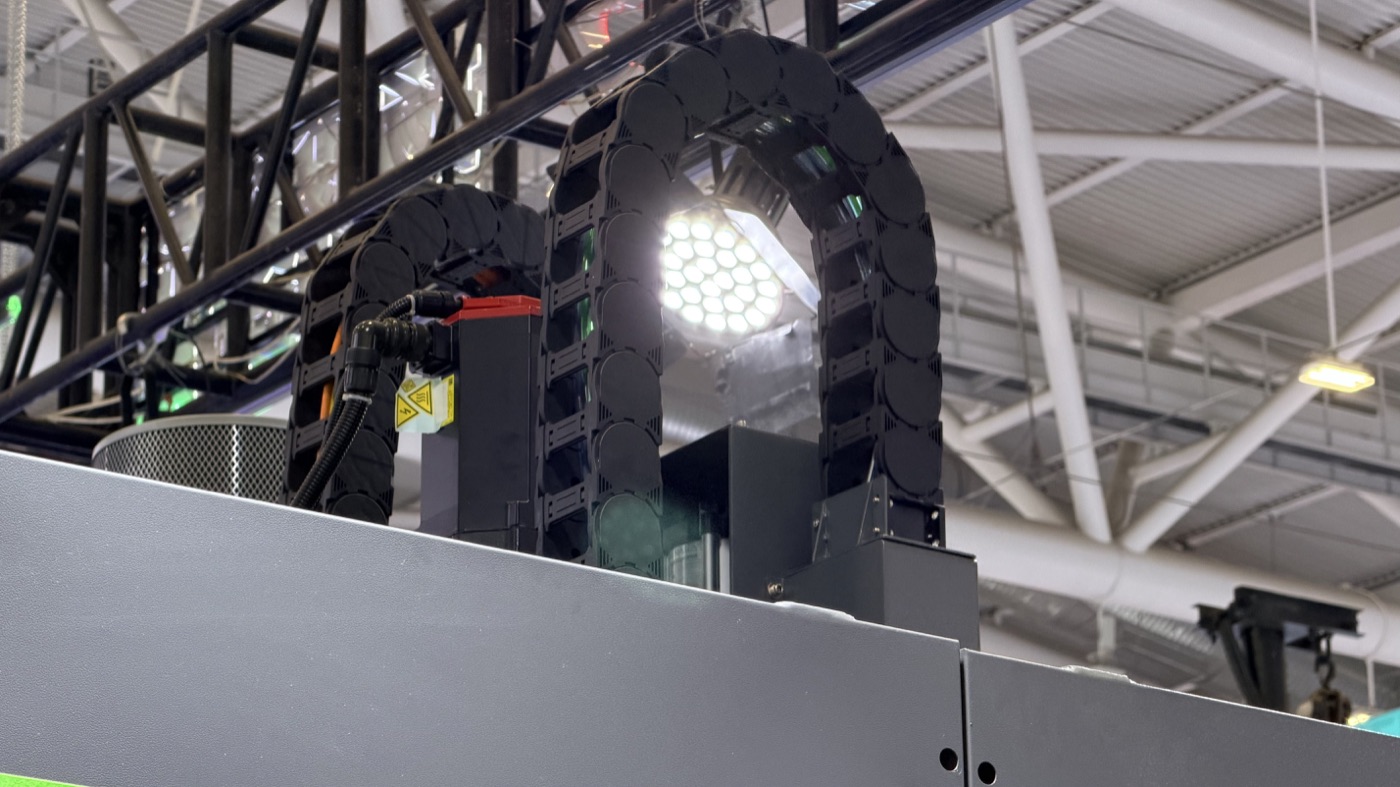
Short, fast, and often mounted on the column or inside the enclosure. The carrier spends most of its life folded, so link wear at the bend is the dominant failure mode. Keep the bend radius generous and use a carrier with a low-friction joint.
Engraving and die-sinking machines
Very high acceleration on short strokes, with fine signal cables running beside spindle power. Electrical separation matters more than mechanical strength; run signal lines in their own compartment and ground the carrier properly.
Gantry and bridge-type machining centres
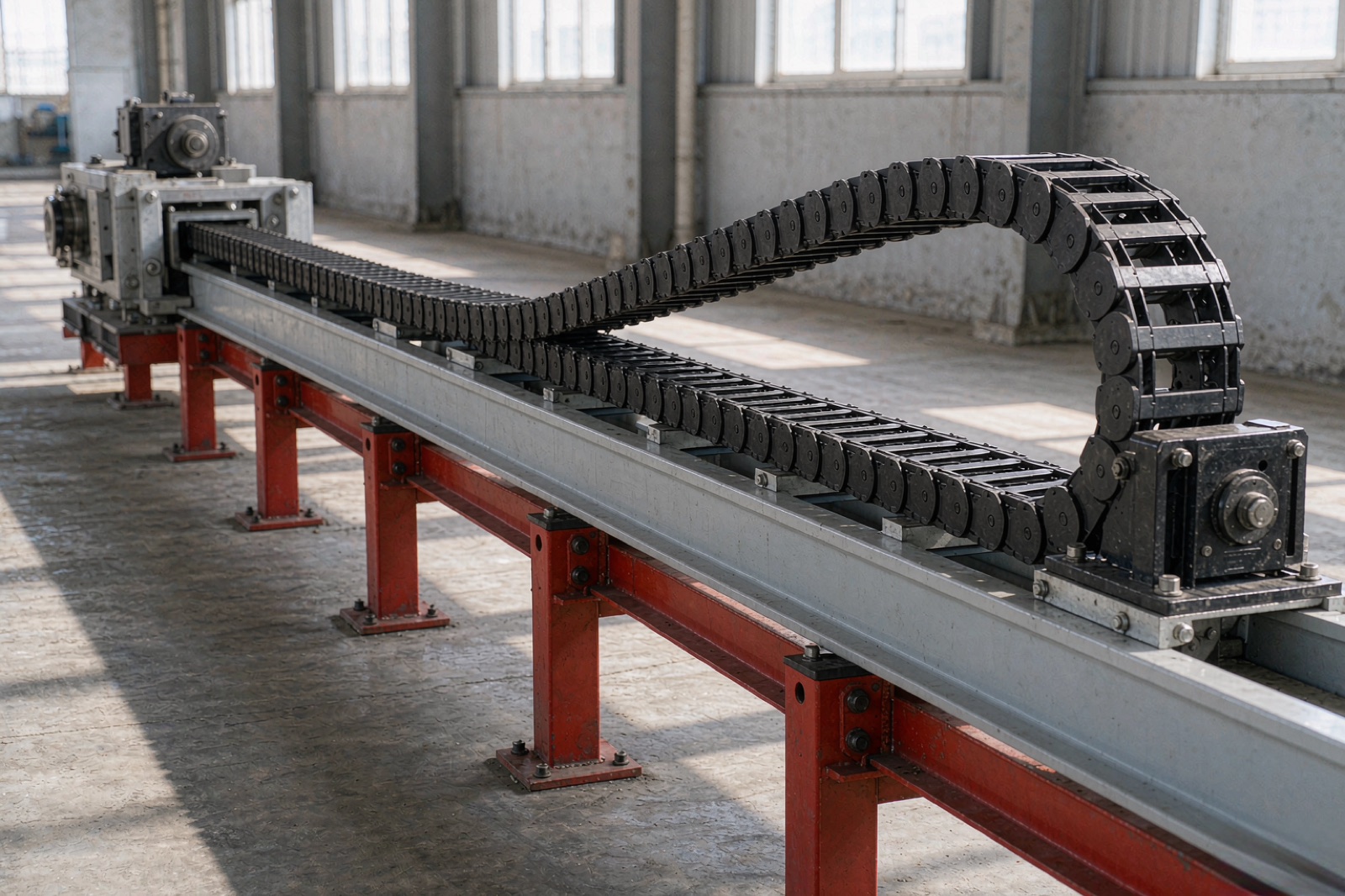
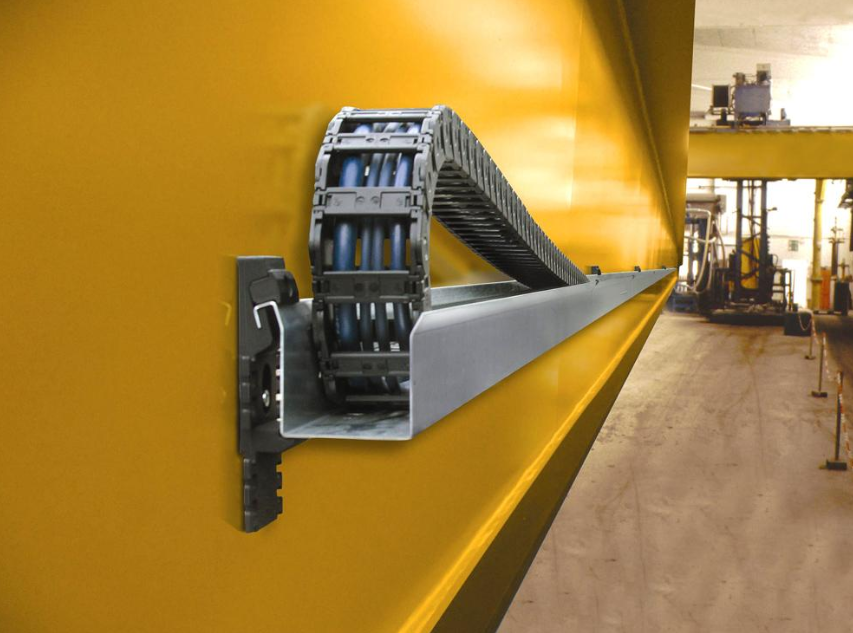
Long horizontal travel with a heavy bundle. This is where gliding versus roller design, guide trough alignment and cable weight per metre decide the outcome. A sagging upper run that rubs on its own lower run will destroy a cable long before the chain itself wears out.
EDM and wire-cut machines
Dielectric fluid, fine wires, and high-frequency pulses. Look for carriers with good chemical resistance and avoid any design that traps fluid inside the cavity.
Installation Details Behind Most Failures
Carriers rarely fail because the catalogue data was wrong. They fail because of small installation decisions.
- The fixed end is not anchored rigidly, so the chain walks sideways over time.
- Cables are pulled tight at the end of stroke instead of being given 10 to 20 percent slack.
- Heavy cables are placed on top of light ones, crushing the light lines at the bend.
- The cable bundle is not centred, so the chain twists and the pins wear on one side.
- The guide trough is misaligned by a few millimetres, which is enough to wear through a chain sideband in a year.
Each of these is cheap to fix at commissioning and expensive to fix after the machine has shipped.
Inspection and Replacement Interval
A machine tool carrier should be checked at the same interval as the linear guide. Look for elongation of the chain over its total length, wear marks on the sidebands, play in the pins, and abrasion on cable jackets at the bend. Chain elongation of more than about 1 to 2 percent, or visible pin play, means the carrier is near the end of its life. Replacing a carrier is a few hours of work; replacing a shattered encoder cable during a production run costs far more.
Choosing a Supplier for Machine Tool Carriers
Look for a supplier who can quote inner height, inner width, bend radius and pitch as separate, freely combinable options, because machine tool axes rarely follow standard sizes. Ask for the load capacity per metre and the recommended maximum speed at your stroke length, not just a generic speed rating. A supplier with real application experience will also tell you when a plastic carrier is the wrong choice, which is more useful than a catalogue that says yes to everything.
SONDA builds plastic and hybrid cable carriers for machine tool axes, with modular links, internal separators and custom radii, and can advise on the gliding or roller configuration that fits your stroke, speed and cable load.
Need help specifying a cable carrier for your machine tool?
Tell us your travel stroke, cable list, travel speed and mounting direction. Our engineers reply with a recommended chain series, bending radius and installation layout, usually within one working day.
Long Travel Cable Carrier: The Complete Guide to Long-Stroke Cable Management