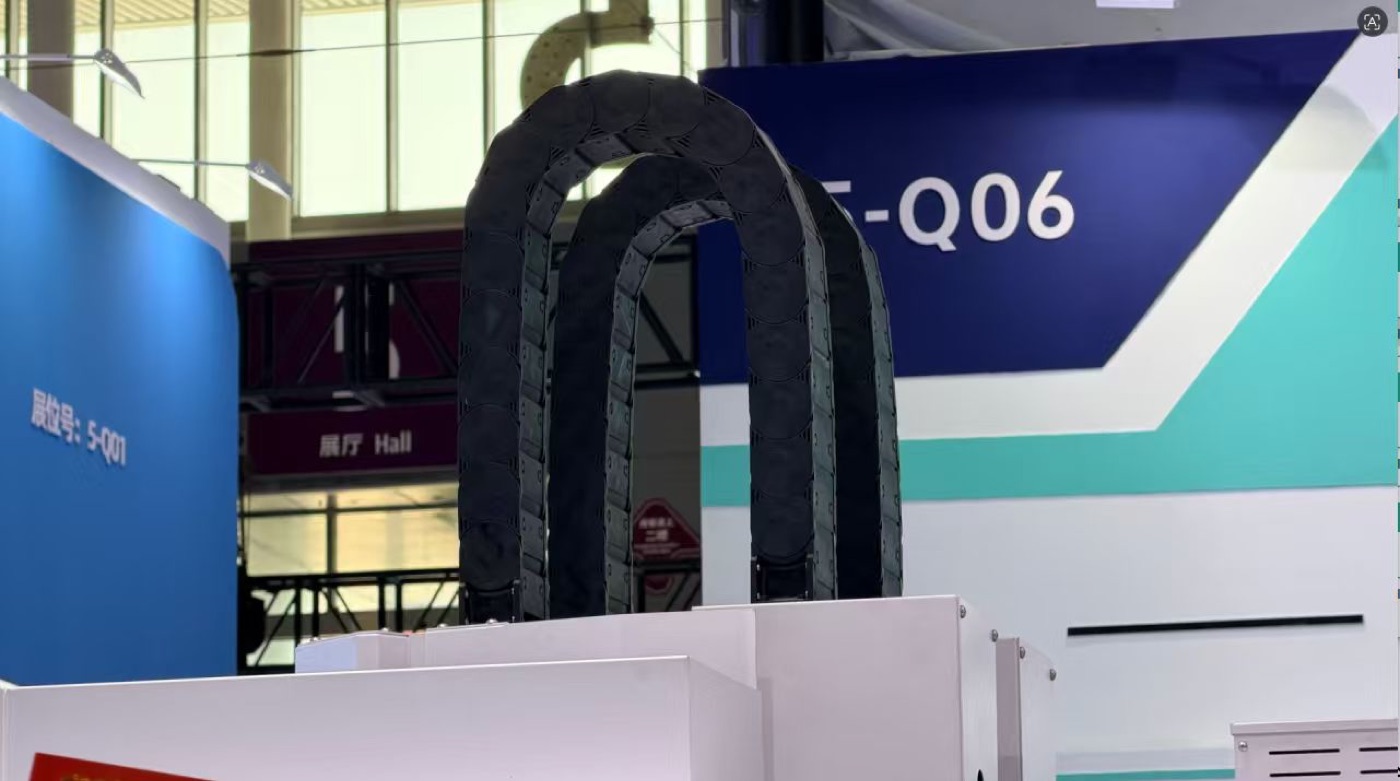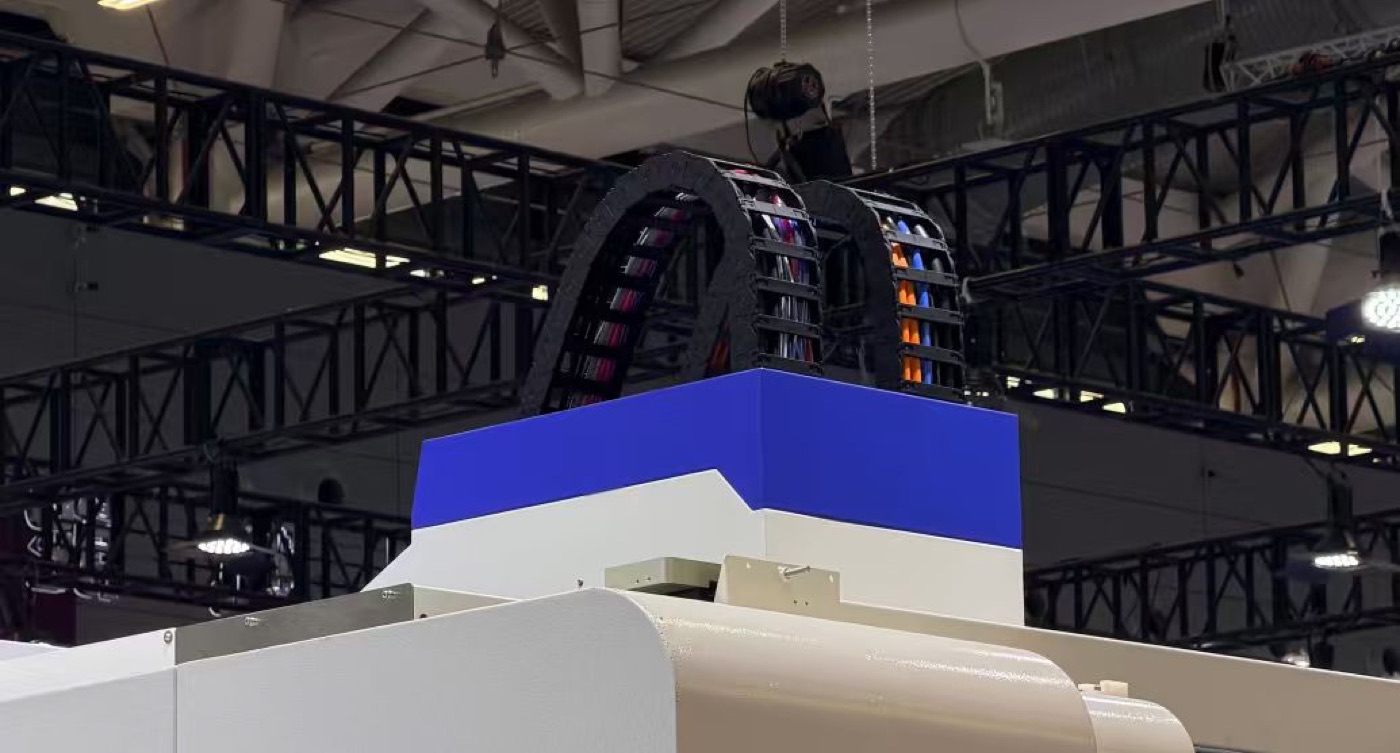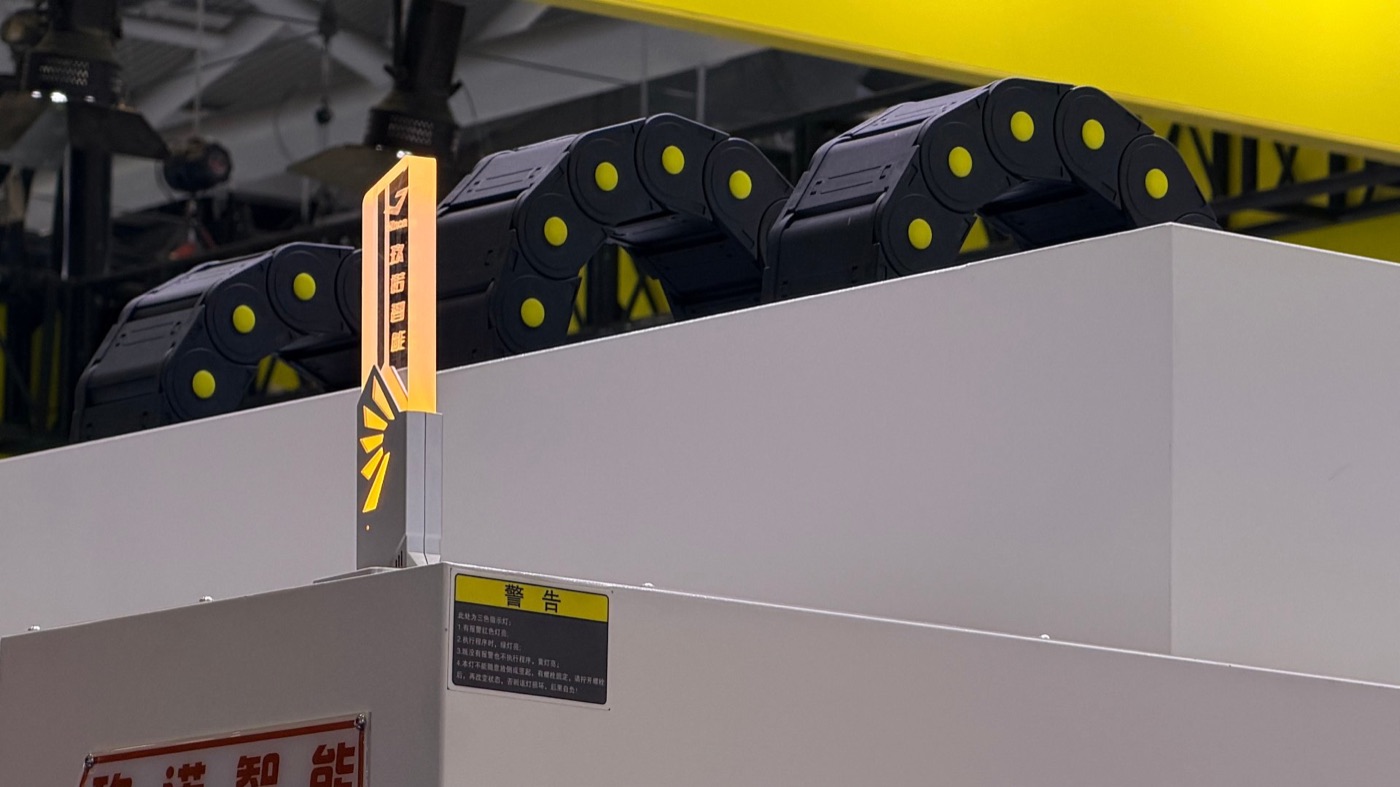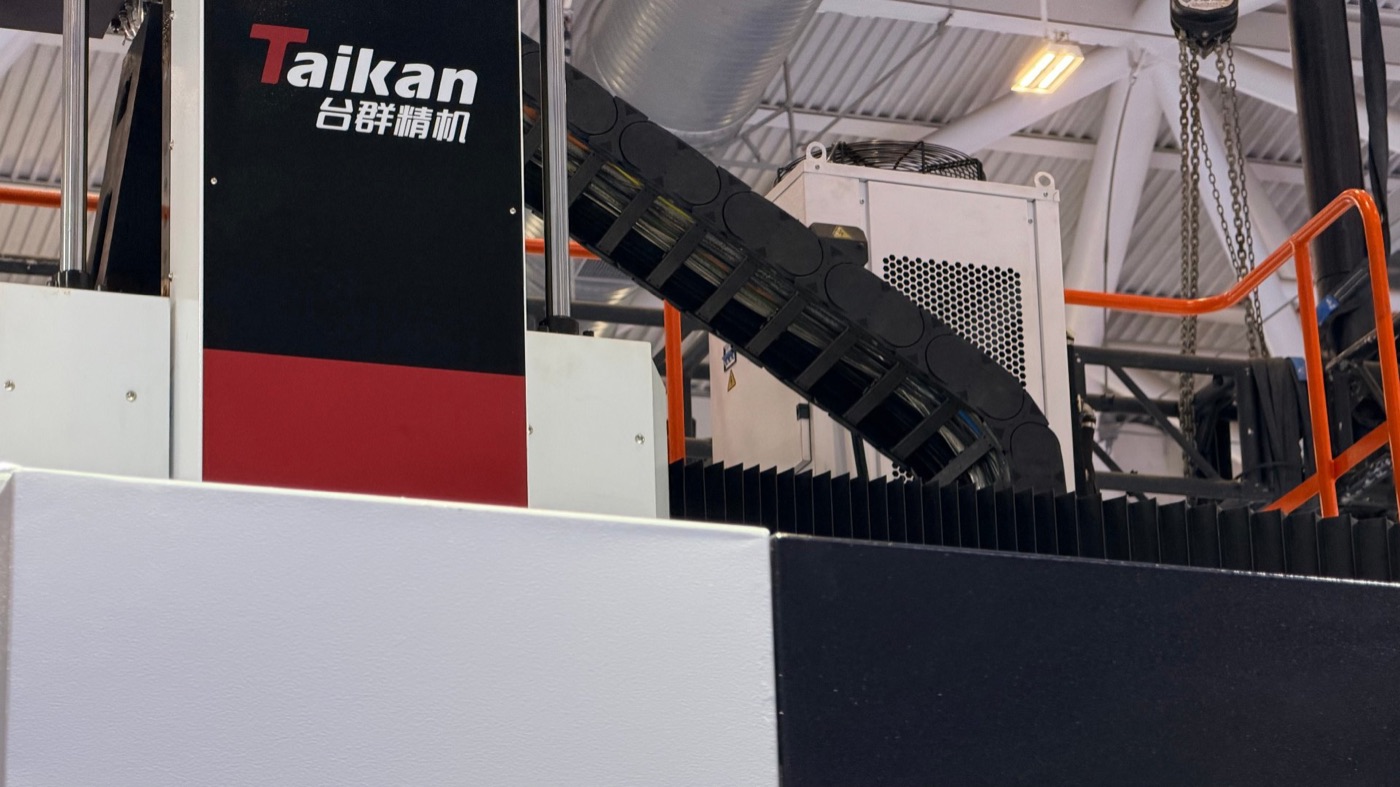
Twin Cable Carriers on One Axis: Layout, Balance and Cable Split
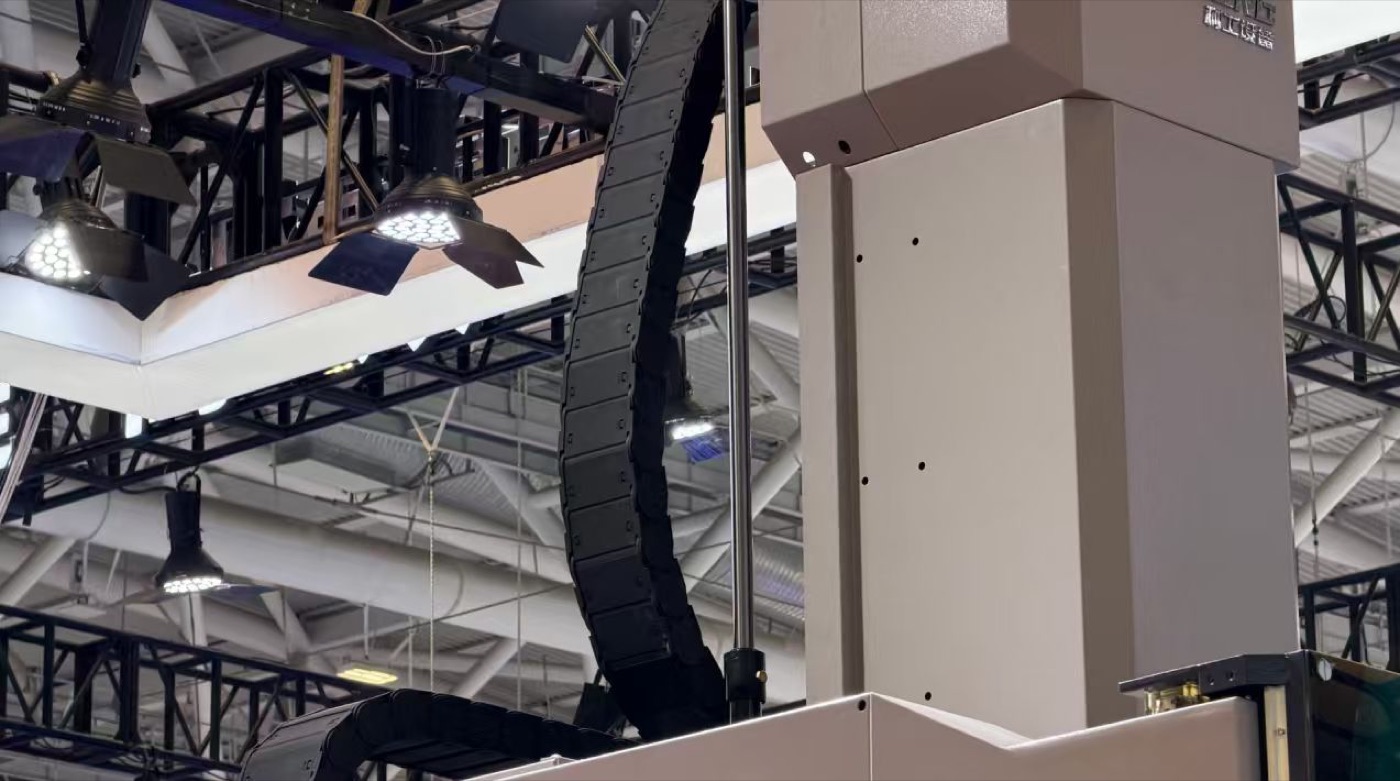
When Two Carriers Beat One
A single carrier is simpler, cheaper and easier to align. Two carriers on one axis are justified only when one of four conditions is true.
- The bundle is too heavy or too wide. Above roughly 60 mm of inner height and 300 mm of inner width, one chain becomes a handling problem, and splitting the bundle into two chains of half the weight each is often cheaper than one oversized chain.
- The two ends of a wide gantry move independently. On a twin-beam gantry with two synchronised but separate drives, each beam needs its own carrier, because a chain spanning both would be loaded by any skew between them.
- Power and signal must be separated. On high-power plasma, laser or induction equipment, physical separation between the drive cables and the encoder cables is a requirement, not a preference. Two chains give the cleanest separation available.
- Redundancy is required. On a machine where a carrier failure stops a production line, a twin arrangement lets one chain be replaced while the other keeps the essential services running.
If none of these applies, one chain with a wider cavity and better dividers is the better engineering answer. Two chains double the parts count, the alignment work and the inspection time.
The Three Layouts
| Layout | How it looks | Best for | Main risk |
|---|---|---|---|
| Side by side, independent | Two parallel runs, each with its own trough and bracket | Wide gantries, separate power and signal | Unequal loading and different wear rates |
| Nested (one inside the other) | A small chain running inside the loop of a larger one | Saving width where space is tight | Inner chain trapped if the outer one fails |
| Opposed / back to back | Two chains facing each other with the loops above and below | Maximum stiffness in minimal height | Difficult access for inspection |
| Stacked vertically | Two chains on separate levels of the same carriage | Very wide bundles on a narrow machine | Upper chain drips onto the lower one |
Side by side is by far the most common and the easiest to maintain. Nested looks elegant in a catalogue and is unforgiving in service: when the outer chain fails it usually takes the inner one with it, and the inner chain cannot be removed without dismantling the outer.
Sizing Each Chain Independently
The most common twin-carrier mistake is to size both chains from the total bundle and then halve the result. Each chain must be sized on the cables it actually carries.
- List the cables in two groups first, then size each chain for its own group: weight per metre, largest diameter, tightest bend radius.
- Do not assume the two chains are the same size. A power chain with four 25 mm² cables and a signal chain with twenty encoder pairs will end up with completely different cavity dimensions.
- If the two chains must be the same series for appearance or spares, size both for the heavier duty, not the average.
- Keep the bend radii identical even if the cavities differ; matching radii keeps the two loops the same height and simplifies the trough.
Load Balancing on the Carriage
Two chains pull on the moving carriage at two points, and unless the pulls are balanced the carriage yaws. On a precision machine that shows up as positioning error at the tool, not as visible damage.
- Place the two brackets symmetrically about the carriage centre of mass, not about its geometric centre.
- Calculate the pull force of each chain at maximum acceleration, including the bundle weight, and compare the two values. A difference above about 15 % should be corrected by redistributing cables.
- On a single-drive gantry, keep the heavier chain on the side nearest the drive; the structure is stiffer there and the yaw is smaller.
- Check yaw with a dial gauge at the tool holder, running the axis at production acceleration, not at creep speed.
Synchronisation and Differential Movement
Two chains on the same axis do not automatically travel the same distance. Three sources of difference matter.
- Bracket position error. If one bracket is 2 mm further along the axis than the other, that chain runs 2 mm further at each end of the stroke, and its loop is 2 mm longer.
- Chain length tolerance. Moulded chains are supplied in nominal lengths with a tolerance; two chains ordered separately can differ by several millimetres. Order them as a matched pair if the application is sensitive.
- Skew in a twin-drive gantry. If the two beams can skew, the chains must be able to absorb that movement without being pulled sideways. This is the main argument for independent troughs.
Troughs: Shared or Separate
A shared trough is cheaper and looks tidy. A separate trough is more forgiving. The decision turns on three questions.
| Question | Shared trough | Separate troughs |
|---|---|---|
| Can the two beams skew? | No | Yes |
| Are the chains the same width? | Yes | Either |
| Is one chain likely to fail first? | No | Yes, and it can be replaced alone |
| Is coolant flowing along the trough? | Drains to one low point | Needs two drains |
| Space available | Less | More |
If a shared trough is used, put a centre divider between the chains so they cannot touch. Two chains rubbing against each other at every reversal wear through a side plate in months.
Splitting the Cables: Power on One, Signal on the Other
The clean split is by function, not by convenience.
- Chain A: spindle or plasma power, servo power, hydraulic and pneumatic lines, high-current brake lines.
- Chain B: encoder and resolver cables, analogue sensors, communication buses, low-level thermocouple lines.
- Never split a single function across both chains. A motor cable in one chain and its encoder in the other is a classic mistake: it doubles the loop area and makes the encoder cable an antenna for the drive noise.
- Keep at least 200 mm between the two chains where they run parallel, or use a metal divider, if the drive is a servo or a plasma inverter.
On a plasma or laser machine the separation matters even more, because the ignition noise is broadband and the height control signal is low level. Physically separate chains are the only reliable answer there.
Mounting Tolerances Between the Chains
- Set both troughs parallel to the axis within 0.5 mm over the full travel.
- Set the two moving brackets at the same axial position within 1 mm, measured from a common datum, not from each other's machined face.
- Set both bracket heights at the same level within 1 mm; a height difference tilts one chain and loads one side plate.
- Check both loops at both ends of the travel. A structure that is straight at mid-stroke may not be at the ends.
Maintenance: They Wear Differently
Two chains on the same machine never wear at the same rate, and the difference is diagnostic.
- The chain with more weight wears faster. If the difference is large, redistribute cables rather than accepting it.
- The chain nearer the drive wears faster on a single-drive gantry, because the structure moves less and the chain takes more of the reversal shock.
- The lower chain in a stacked layout collects fluid from the upper one; check its clamps and cable entries for corrosion.
- Inspect both at the same interval but record them separately, so the wear trend of each is visible.
Checklist for a Twin Layout
- Reason for two chains: weight, independence, separation or redundancy.
- Layout: side by side, nested, opposed or stacked.
- Cable split by function, with the weight per metre of each group.
- Chain size and bend radius for each group, independently.
- Bracket positions relative to the carriage centre of mass.
- Trough arrangement and whether the beams can skew.
- Inspection access to both chains, including the inner one in a nested layout.
Answer those seven before drawing the trough, and the twin layout behaves like two well-behaved single axes rather than one axis with a permanent alignment problem.
Running twin cable carriers side by side on one axis?
Send us the mounting position, stroke, cable weight per metre, travel speed and the support or guide trough you can provide. Our engineers reply with the series, bend radius and fixing layout, usually within one working day.
Cable Carriers for Large-Format Machine Tools: Long Travel, Wide Gantries and Heavy Bundles
Plastic Drag Chain Series for Machine Tools: Material and Selection
Related Article