Vertical Cable Carrier for Machine Tool: Hanging Axis Guide
What Changes When the Axis Is Vertical
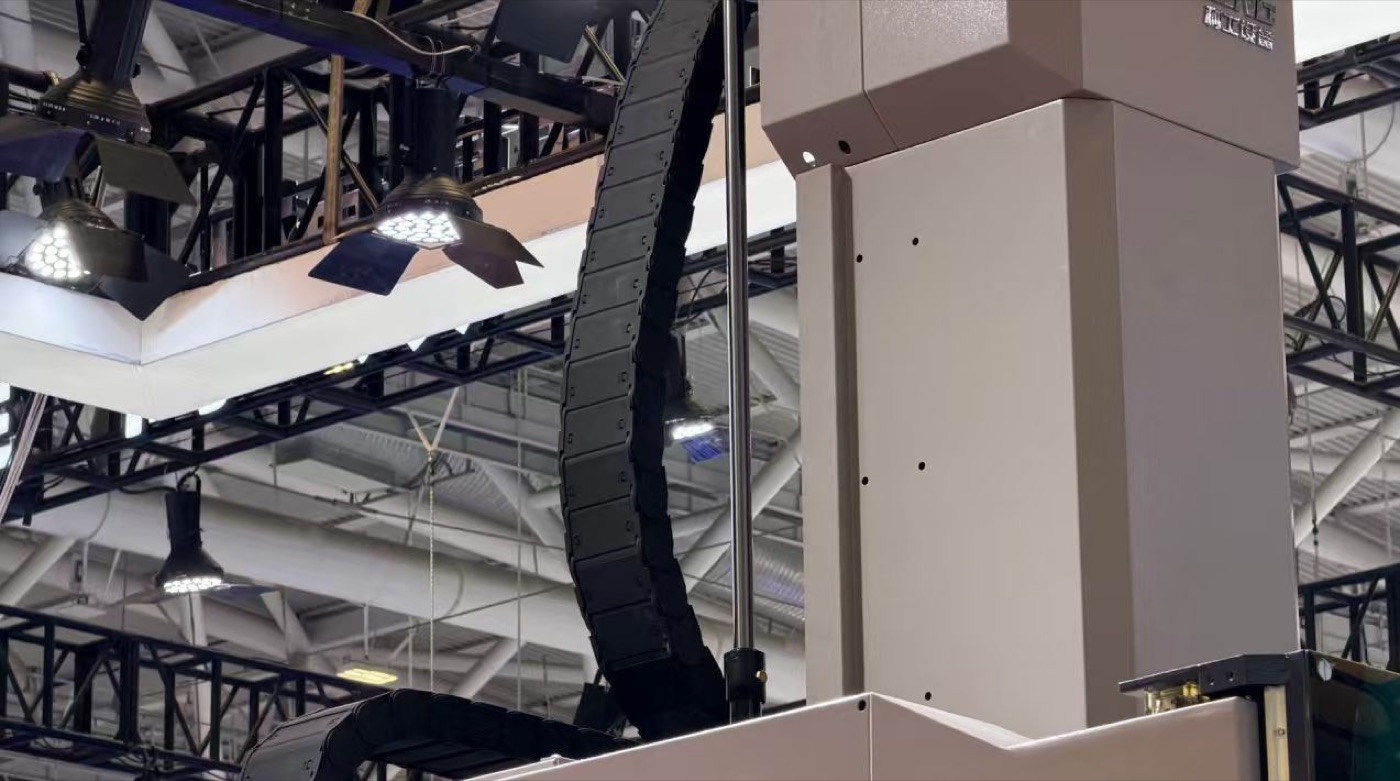
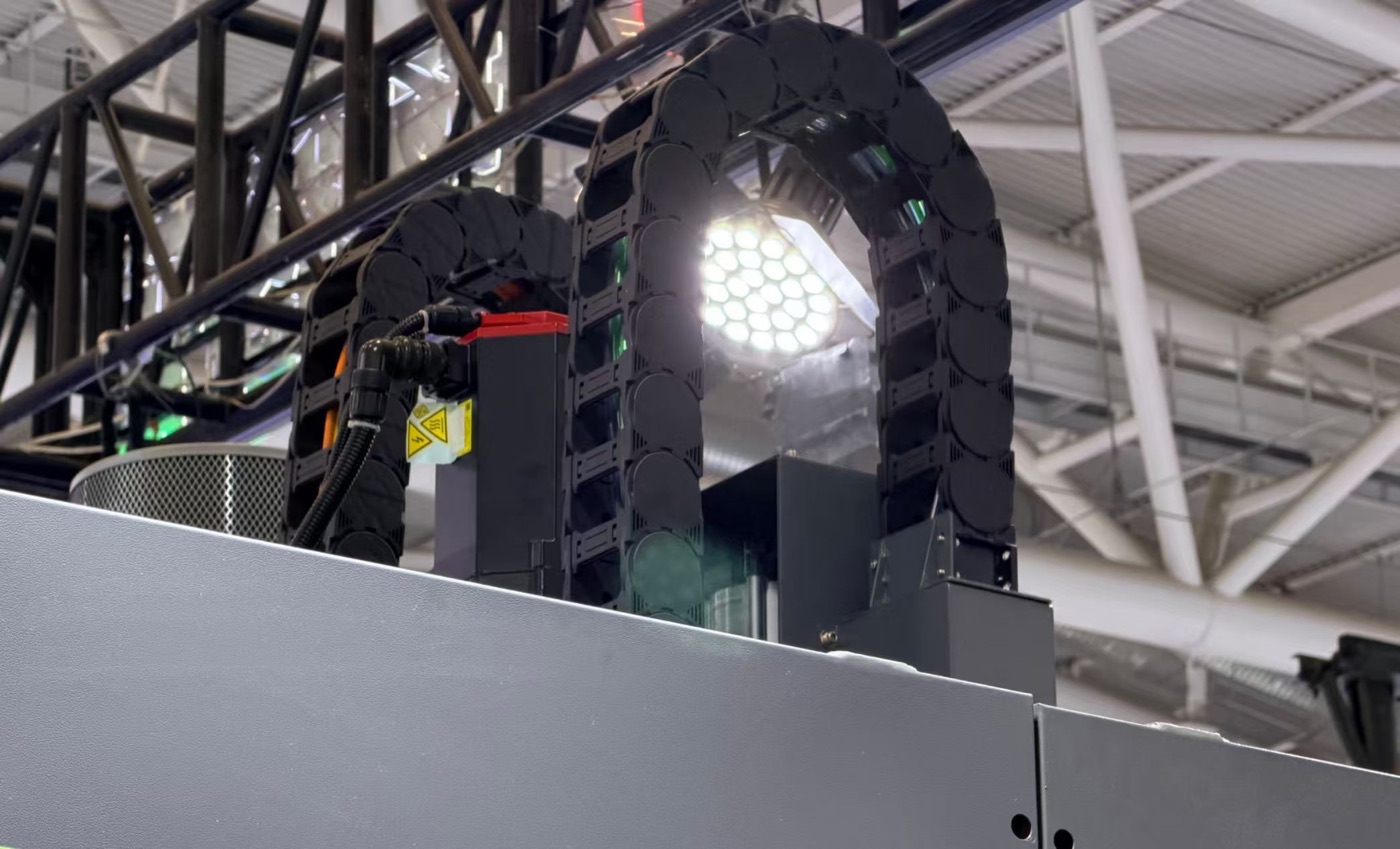
A vertical cable carrier for machine tool duty works against gravity. On a horizontal axis the chain rests on itself and the guide trough carries the load. On a Z axis, a ram or a lift column, the chain hangs from its fixed point, the bundle hangs inside the chain, and every kilogram of cable pulls on the top links with nothing underneath to support it. That single difference changes the choice of series, the clamping arrangement and the maintenance schedule.
Hanging Length and the Weight of the Chain
The limiting factor on a hanging carrier is the load at the fixed end, not the load on the cables. As the chain extends, its own weight plus the bundle weight accumulates at the top bracket, and the first two or three links take almost all of it. Three rules keep that number under control.
| Vertical application | Typical hanging length | What to verify first |
|---|---|---|
| Vertical machining centre Z axis | 0.5 – 1.2 m | Clamping, twist, and cable slack at the bottom |
| Ram-type or gantry Z axis | 1.5 – 3 m | Chain self-weight and bracket strength |
| Lift column, loader or pallet changer | 3 – 6 m | Number of links in tension and a take-up system |
Above roughly three metres of hanging chain, the top links become the wear item and a straight vertical run is no longer the best answer. A counterweighted or spring-loaded take-up, or a change to a vertical loop with the bend at mid-stroke, spreads the load and removes the constant tension from the top bracket.
Clamping the Bundle So the Chain Does Not Slide
Inside a vertical carrier the cable bundle is a sliding mass. If it is not clamped at the moving end, it settles downward over the first weeks, pulls the conductors out of the terminal box and puts the cable jacket under permanent tension. The correct arrangement is a clamp block at the moving end that grips each cable individually, plus a strain relief at the fixed end that carries the weight of the bundle rather than the conductors.
- Clamp every cable, not only the heaviest. Unclamped thin cables slide between the clamped ones.
- Leave 10 – 20 % slack between the clamp and the first bend so the cable is never in tension at the lower end of the stroke.
- Use a clamp block with individual bores rather than a single plate; a plate crushes the outer cables and leaves the inner ones loose.
- Re-check the clamps after the first 500 hours; settling is normal and a second torque pass is cheap.
Twist and Side Sway Under Acceleration
A hanging chain is a pendulum. On a machine that accelerates the Z axis while the X axis is moving, the chain swings sideways, and if the natural frequency matches the axis reversal rate the swing grows. Three measures keep it under control.
- Choose a series with a wide, stiff side plate rather than the narrowest chain that fits.
- Keep the bundle centred across the width; an off-centre bundle guarantees twist in a hanging chain.
- Add a guide on long hanging runs, or shorten the unsupported length with an intermediate support bracket.
Speed and Stroke Limits for Hanging Chains
Vertical carriers tolerate lower speed than horizontal ones because the chain cannot rely on a trough to damp movement. As a working rule, keep vertical travel speed below about 1.5 m/s for plastic chain with a hanging bundle, and below 1 m/s once the hanging length exceeds three metres. Above those values the links slap against each other at each reversal, the pins wear on one flank, and the chain starts to snake.
Maintenance Specific to Vertical Axes
- Check clamp torque and look for polished marks on the jacket where a cable has been sliding.
- Look for elongation at the top links — the first three links wear fastest on a hanging chain.
- Check for twist by sighting along the chain with the axis at mid-stroke.
- Inspect the bottom end for cable bunching, which means the bundle has settled and the slack is gone.
What to Send for a Vertical Carrier Quotation
- Vertical stroke, and the hanging length from the fixed bracket to the moving end
- Cable and hose list with diameters and weight per metre
- Travel speed and acceleration, and whether X and Y move at the same time
- Whether a take-up, counterweight or intermediate support is possible
- Bend radius and the space available behind the ram or column
SONDA produces plastic cable carriers for vertical machine tool axes with clamp blocks, anti-twist link geometry and series rated for hanging lengths up to six metres. Send the stroke and the bundle weight per metre and you will get a hanging-length check, not just a chain size.
Mounting a cable carrier on a vertical axis?
Send us the mounting position, stroke, cable weight per metre, travel speed and the support or guide trough you can provide. Our engineers reply with the series, bend radius and fixing layout, usually within one working day.
Cable Carrier for Engraving Machine and CNC Router: Sizing Guide
Drag Chain for Machine Tool: Construction, Series and Wear
Related Article