Steel Drag Chain HXSD-Steel
The TL series is our steel chain range, ten models from TL45 to TL250. Steel is specified for reasons that plastic cannot answer: long unsupported spans, high temperature, heavy loads and large hose bundles. This page sets out where the boundary actually sits, because choosing steel when plastic would do costs the customer weight, noise and money, and choosing plastic where steel is needed costs them a machine.
TL series specifications
| Series | Inner height | Outer height | Bend radius | Pitch | Minimum inner width | Outer width | Max cable diameter | Unsupported length |
|---|---|---|---|---|---|---|---|---|
| TL45 | 16 mm | 32 mm | R50 - R145 | 45 mm | 35 mm | Bi + 12 mm | - | 2.5 m |
| TL65 | 31 mm | 49 mm | R75 - R185 | 65 mm | 50 mm | Bi + 16 mm | Ø33 mm | 3 m |
| TL80 | 32 mm | 56 mm | R100 - R300 | 80 mm | 55 mm | Bi + 16 mm | Ø35 mm | 4 m |
| TL95 | 53 mm | 75 mm | R115 - R300 | 95 mm | 60 mm | Bi + 20 mm | Ø55 mm | 4.5 m |
| TL115 | 58 mm | 86 mm | R150 - R600 | 115 mm | 70 mm | Bi + 24 mm | Ø63 mm | 6 m |
| TL125 | 66 mm | 100 mm | R115 - R400 | 125 mm | 80 mm | Bi + 24 mm | Ø75 mm | 7.5 m |
| TL155 | 86 mm | 120 mm | R250 - R800 | 155 mm | 90 mm | Bi + 26 mm | Ø97 mm | 9 m |
| TL180 | 112 mm | 144 mm | R250 - R600 | 180 mm | 100 mm | Bi + 26 mm | Ø110 mm | 10.5 m |
| TL225 | 152 mm | 200 mm | R350 - R850 | 225 mm | 160 mm | Bi + 38 mm | Ø146 mm | 11.5 m |
| TL250 | 172 mm | 220 mm | R350 - R1050 | 250 mm | 190 mm | Bi + 28 mm | Ø166 mm | 13 m |
Inner width is free within each model rather than moulded in fixed steps, so a width between two plastic sizes costs no tooling and no lead time penalty. Outer width equals inner width plus the side plate allowance shown in the table.
The number that decides steel: unsupported length
Read the last column. It runs from 2.5 m on TL45 to 13 m on TL250. That is the span the chain can cross without a support tray or gliding arrangement under it, and it is the figure that most often ends the plastic conversation.
A plastic chain of comparable size manages a fraction of that before it sags enough to run badly. Where a machine has a long horizontal travel and no room for a guide trough, the choice is steel or a structural change to the machine. That is the honest version of the decision, and it is why a steel chain can be cheaper overall even at three times the unit price.
The related figure is total travel. The enclosed TLG variants run to roughly 32 m of travel, which puts them in gantry and crane territory where no plastic chain is considered at all.
Construction
The chain is built from three materials doing three jobs. Side plates are carbon steel with a plated finish, which carries the tensile load and takes the pin bearing pressure. Cross bars are extruded aluminium, keeping the weight down where it does not need to be steel. Pins are alloy steel, hardened, because that is the surface that wears.
Two consequences follow. First, the chain needs no lubrication in normal service but does need the plating intact, so wet or acidic environments call for the stainless variant rather than the standard plated part. Second, aluminium cross bars are the lightest component and also the softest, so a chain that has been run with a badly routed bundle usually shows the damage there first.
Enclosed versions: TLG and TLE
The TLG range is the fully enclosed steel chain: bend radii R75 to R600, chain plate heights 50 to 150 mm, maximum travel around 32 m, and support board widths 50 to 600 mm with 5 mm hole adjustment. Board types are TLGA for the top-and-bottom separated version and TLGB for the frame version.
TLE is the aluminium enclosed variant, and it goes wider than the steel version, up to 1200 mm of support board width. Order codes for TLE use the 10B, 20B and 30B designations rather than 10A, 20A or 30A, and a full code reads TLE100-R300xB1350xL6800.
Length calculation
For the enclosed steel range, length is estimated as 1.2 times the stroke plus 4 times the bend radius. On an 8 m stroke at R300 that gives 9,600 mm plus 1,200 mm, or 10,800 mm of chain.
For the open TL series the calculation follows the standard relation: half the stroke plus a bend allowance of pi times the radius, plus two pitches. The pitch term is the one people leave out, and at TL250 with a 250 mm pitch it is a 500 mm error on a single chain.
Ordering
The order code is model, support board type, radius, board width and length: TL180 II-250x9600 for an 180 model with a separated support board, R250, 250 mm board width and 9,600 mm length.
Three things to send with an enquiry at this size: the stroke, the bundle weight including hoses full of fluid, and the ambient temperature range. The first sets the length, the second decides whether the chain or the support structure is the limiting item, and the third decides whether the standard plated chain is acceptable at all.
Plastic or steel, in one paragraph
Take plastic up to roughly 10 m of travel, up to 5 m per second, and wherever the environment is clean and the load is under a few tens of kilograms per metre. Take steel beyond those, or wherever temperature, abrasive dust, impact or a long unsupported span makes the plastic chain the weakest part of the machine. Between the two there is a wide band where either will work, and there the decision is usually weight and noise against span and service life, not capability.
Related technical articles
Selection guides, installation notes and application cases related to Steel Drag Chain HXSD-Steel.
- Steel vs. Plastic: Selecting the Right Material for Your Lon
- Discount Steel Drag Chain – Strong, Reliable, and Affordable
- Cheap Drag Chains from China: Nylon & Metal Options
- Cheap Steel Drag Chain: How to Reduce Costs Without Compromi
- Metal Cable Drag Chains Built for Extreme Industrial Conditi
- Steel Drag Chains Built for Heavy Industry
- Stronger Cable Protection with High-Performance Metallic Dra
- Global Drag Chain for Machine Market: Steel and Enclosed Sol
- Steel Drag Chain Market Trends and OEM Cable Solutions for A
- Choosing the Right Cable Carrier Material: Aluminum, Steel,
- Durable Stainless Drag Chains for Industrial Automation
- Durable Steel Cable Drag Chain for Industrial Machines
- Stainless Steel Drag Chain for Food & Chemical Industry
- Strong & Smart: The Best Metal Cable Drag Chain Solution
- Smart Heat-Resistant Cable Chains for Steel Plants
- Stainless Steel Pharma Cable Tracks for Reliable Operations
- Durable Stainless Steel Energy Chains for Food & Pharma
- Reliable Cable Tracks for Pharmaceutical Production
- SONDA Stainless Steel Drag Chains: Corrosion-Resistant for C
- SONDA Automated Factory Cable Chains: Plastic vs Metal, Chea
- Steel Energy Chain & Steel Cable Carrier Factory: SONDA vs i
- Metal Energy Chain & Steel Cable Carrier Experts: SONDA vs i
- Metal Cable Carriers & Corrosion-Resistant Offshore Solution
- Steel cable drag chain & Stainless Steel Drag Chain: SONDA v
- bend radius and mounting height
TL45 Steel Cable Drag Chain
Model NO.:TL45
TL65 Steel Cable Drag Chain / metal chain replacement / SONDA
Model NO.:TL65

TL80 Steel Cable Drag Chain / metal chain replacement / SONDA
Model NO.:TL80
TL95 Steel Cable Drag Chain / metal chain replacement / SONDA
Model NO.:TL95
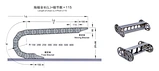
TL115 Steel Cable Drag Chain / metal chain replacement / SONDA
Model NO.:TL115
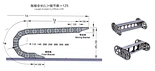
TL125 Steel Cable Drag Chain / metal chain replacement / SONDA
Model NO.:TL125
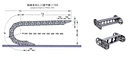
TL155 Steel Cable Drag Chain / metal chain replacement / SONDA
Model NO.:TL155
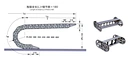
TL180 Steel Cable Drag Chain / metal chain replacement / SONDA
Model NO.:TL180
- 1
- 2
